
Daily Episodes
*Please note that the order of episodes is arranged with the most recent on top. Older episodes are lower in the stack.
- Closing Thoughts on the Closing Scenes – Sunday, 4/12/26
- Beginning a Happy Ending – Sabbath, 4/11/26
- Empowered for Mission – Friday, 4/10/26
- Repairing Peter’s Reproach – Thursday, 4/9/26
- Recall and Restart – Wednesday, 4/8/26
- Flesh and Blood – Tuesday, 4/7/26
- The Blind See – Monday, 4/6/26
- He’s Alive – Sunday, 4/5/26
- Sabbath – Sabbath, 4/4/26
- It is Finished – Friday, 4/3/26
- Privileged Service – Thursday, 4/2/26
- Behold The Man – Wednesday, 4/1/26
- Herod’s Folly – Tuesday, 3/31/26
- Pilate’s Possibility – Monday, 3/30/26
- Confession Ain’t Repentance – Sunday, 3/29/26
- Remedying Peter’s Poison – Sabbath, 3/28/26
- God’s Great Glory – Friday, 3/27/26
- Light Amidst Darkness – Thursday, 3/26/26
- Cruelest Garden – Wednesday, 3/25/26
- Incredible Intercession – Tuesday, 3/24/26
- Pure Truth, Pure Love – Monday, 3/23/26
- Good News about “Bad” News – Sunday, 3/22/26
- The True Vine – Sabbath, 3/21/26
- Too Loved – Friday, 3/20/26
- Too Brash – Thursday, 3/19/26
- Grief Comforted – Wednesday, 3/18/26
- Too Smart – Tuesday, 3/17/26
- Remember – Monday, 3/16/26
- The King Servant – Sunday, 3/15/26
- Helpers Helped – Sabbath, 3/14/26
- Investment Advice – Friday, 3/13/26
- Adequate Oil? – Thursday, 3/12/26
- Which Day? – Wednesday, 3/11/26
- Refusing to See Jesus – Tuesday, 3/10/26
- We Would See Jesus – Monday, 3/9/26
- Woe – Sunday, 3/8/26
- An Earnest Seeker – Sabbath, 3/7/26
- Trappers Trapped – Friday, 3/6/26
- Warnings Unheeded – Thursday, 3/5/26
- The Second Temple Cleansing – Wednesday, 3/4/26
- The Triumphal Entry – Tuesday, 3/3/26
- Simon’s Feast – Monday, 3/2/26
Closing Thoughts on the Closing Scenes
Aired Sunday, April 12, 2026
We have spent the last 6 wks reviewing events, stories and Christ’s teachings that relate to the last 2 months of His life, death, rest, resurrection and ascension. Now, looking over this momentous time, what is one to think about it? It could be seen as just remote history that doesn’t have much impact today, or we can celebrate the record that has been passed down so that we know as much as we do. Christ set His face “…like a flint, and [stated] I know that I shall not be ashamed.” (Isaiah 50:7) These closing scenes seem to us to be impossible. The impossible became possible when Christ put on our humanity and through the Father, could do all things.
The warfare with evil was unconventional by our standards. Submitting to the abuses of the enemy and suffering death, hardly seems like a victory by the world’s estimation. Strangely, death is the only way back into life. Talking about the resurrection seems so much more enjoyable and many have the attitude, Christ died so I don’t have to, but that wasn’t what the apostle Paul taught. Paul also calls the Christian life a warfare, but what a strange warfare it is. For many it seems easier to align with Peter who with sword drawn, takes off an ear. Christ said, “…all who take up the sword shall die by the sword.” This isn’t passivism. This is active combat, but the fight is to “…reckon yourselves dead to sin, but alive to God through Christ Jesus our Lord.” (Romans 6:11) Resting in our Redeemer, Creator, the enemy comes in like a flood to annoy, afflict and destroy. By resting in the Father, our Savior was able to tolerate the most severe physical, spiritual and mental abuse. He was able to tolerate this all the while He was experiencing the devastation of being separated from His Father since the Son became the sin-Bearer. He didn’t accomplish this rest by gritting His teeth and flexing His muscles. He rested in the Father that He couldn’t see, by using the eyes of Faith. Knowing the character of His Father, recalling the past precious times of closeness with His Father and submitting to His Father’s will, even though it appeared to be a dead-end, brought Him victory.
Why faith? Because the whole problem of evil was born out of doubt. Because of doubt, independence and rebellion came into existence. Doubt brought suspicion on the character of God and instead of confidence being placed in God, confidence was placed in ourselves or someone like us. Peter fully trusted himself and denied Christ multiple times long before he ever got to the night of his major blunder. By disagreeing with Christ over the warnings that Christ was giving him, Peter demonstrated that his trust was in himself. Peter’s independence became unmistakable and very public when with cursing and swearing, Peter said the obvious, “…I do not know Him.” (Luke 22:57) If Peter had known Christ to be God, he would’ve taken the warning to heart and pled for a deeper knowing of Christ and that knowing would’ve made it very clear that trusting in one’s self is rubbish. Were it not for a catastrophic failure, Peter would have continued to be blind to his own vulnerability and flaws. Peter could have learned this lesson much earlier, but the more important lesson is that Christ continued to work with this brash, obstinate, tough fisherman, and He will continue to pursue and teach us as well. Will it take us catastrophic failure to learn to know Christ? Maybe, but may we follow the pathway of Peter and not Judas.
In the tyranny of impossibles, we learn to know who our Savior is. In knowing who our Savior is, we can rest. While resting, we can manifest the trust in God that will keep us from being reactive, irritable, bitter, anxious, intolerant and angry when we are mistreated by others. Faith is just the response to an experiential knowing of God. Love is the experience, faith is the response. When we know our Redeemer, we can say, “I am finished!” Finished with trying to save myself. Finished with resisting Christ’s “…purposes of peace and not of evil, to give…a future and a hope.” Finished with treating a self-sacrificing, loving God with suspicion. We can then sing, “What a Friend We Have in Jesus.” Christ says, “Come to Me, all you who labor and are overly burdened, and I will give you rest. Take My yoke upon you, and learn from Me; for I am meek and lowly in heart; and you shall find rest for your being. For My yoke is easy, and My burden is light.” (Matthew 11:28-30)
Beginning a Happy Ending
Mark 16:19,20; Luke 24:50-53; Acts1:9-12
Aired Sabbath, April 11, 2026
Context
Mt Olivet past the summit near Bethany
Eleven Disciples
Words of encouragement
The ascension – retaining His humanity
Two angels reassure the Disciples
The Disciples return through Jerusalem revealing joyful faces full of optimism
Triumph in Heaven over the accomplishments of Christ
Themes
Assurance of Christ’s persistent Presence
Christ’s separation from Disciples will be limited as the Holy Spirit indwells them and they know Christ is at the Right hand of the Father
Connection re-established between Heaven and earth
Triumph of Christ with ratification of the plan of redemption with the Father
Enemy is defeated
God’s people now take up the work that Christ has started
Narrative
It has been forty days since the Resurrection. Christ has met with the Disciples and 500 people in Galilee and given the great commission. Now Christ and His eleven Disciples make their way through the streets of Jerusalem. There are many who recognize them, but they pass through undisturbed. They make their way back across the Brook Kidron and into Gethsemane. They stop to look at the grapes and the vine and the object lesson is refreshed. They also review lessons about prayer and watching while passing by the Garden of Gethsemane where the trauma took place 6 wks prior. They toil up the slope to the top of Mt Olivet and then continue part of the way to Bethany. Christ raises His hands and pronounces blessings and assurance of His continued care. Beams of light gather around Christ and His glory emanates all around. The gravity of Heaven is greater than the pull of the earth. He lifts up from the earth bearing their humanity. The eleven Disciples eyes are fixed on the Savior with reverent awe. At last, they can see Him no more. They then hear a voice as beautiful and melodious as have ever been heard. Two angels in the form of men assure them that “…this same Jesus will come in a similar way as He left.”
The Disciples make their way back through Jerusalem. Those who know them expect that they will see downcast and sad faces, but are surprised by expressions of joy and thanksgiving with faces lit up with the confidence that comes with knowing that they have an Advocate, in their humanity, at the Right hand of the Father. They have nothing to fear. They can be as close to Christ as when He walked with them, no matter where they are. Separation isn’t going to prevent them from experiencing the presence of Christ. They are united with Him. They have experienced the baptism of death and resurrection with Christ. Prior to Christ’s death, they were interested in being first and having earthly power and wealth. Now, all that has died with Christ. They now are resurrected and see how close Christ is through His Spirit and they have all of Heaven as their source of power. Their wealth isn’t measured in Roman coins, but in streets paved with gold and Christ preparing many mansions for them. Christ’s love has been poured out and they now have the eyes and ears to appreciate this gift and in turn, they will love others and continue to scatter Gospel seed and tend to Christ’s lambs and sheep. They consider it a high honor to be given the privilege to work in His vineyard.
Christ and the holy escort arrive back at the gates of Heaven and the antiphonal choirs call back and forth, “Lift up your heads, O ye gates and be ye lifted up ye everlasting doors, and the King of Glory will come in.” The other choir sings out, “Who is this King of Glory?” The response is the highest elated praise, “The LORD strong and mighty, The LORD mighty in battle!” (Psalms 24:7,8) The choirs love to sing the Name above all names. Christ pauses the celebration. Angels hush and bow as Christ presents Himself to the Father. Is the Sacrifice adequate? Have the requirements been met that were established long before sin came into existence. Father and Son review all the details and requirements and yes, the plan has been carried out and Salvation is fully established and available to all who will humbly acknowledge their need and plead with God through the Son, believing on His powerful name, to make every area of their life available to the Spirit of God and be transformed into Christ’s image from glory to glory. “Lo, I AM with you alway, even to the end of the age!” Christ is the victor, but the conflict between Christ and Satan isn’t over. God’s people must now give that same revelation of the Father that Christ gave the 33 years He was here. Everyone must be given access to the Truth, the Life and the Way. This Gospel will be refused by many, but there will be many who see and believe and embrace the One who is mighty to save!
Why did Christ return to Mt Olivet to ascend back to Heaven?
Can we with awe-filled faces see that although Christ ascended, He is still with us and in us?
Can we die to our earthly dreams of power, ease and wealth and find true security in Christ and His riches?
Will we give Christ, through the Spirit, the opportunity to reveal the Father in truth, in us?
Will we allow our faces to shine with the glory of Christ, seated at the Right hand of the Father, knowing He is our High Priest and Advocate?
Empowered for Mission
Matt 28:16-20; Mark 16:15-18
Aired Friday, April 10, 2026
Context
Galilee – The final meeting and commission
11 Disciples and ~500 people gathered in small groups
They have been instructed to meet here one last time by Christ on multiple occasions prior to and following the Crucifixion
There are small groups discussing the prophecies and how they pertain to Christ and stories are being told of Christ’s activities
Suddenly Christ is in their midst
There are still some who doubt
Christ tells this small audience that “All power has been given to Me in heaven and on earth. Go and make disciples of all nations…”
Empowered by His life with the great love and concern for each person, His disciples will give testimony to the presence and nature of God to the world
No matter how small, weak or limited in resources we are, the seemingly impossible great commission will be carried out, by faith in the Son of God, when we cooperate to complete His mission
Themes
Salvation
Ministry
Truth
Grace
Gospel
Triumph
Narrative
Christ has spelled out the time and location for this last gathering prior to and after His crucifixion. This appointment has then been carried by word of mouth from small group to small group. The eleven Disciples and about 500 people gather in the Galilean hills. They have come by different routes and different times so that suspicion and hostilities aren’t directed at them. While waiting, they speak of Christ and recall the prophecies of the Scriptures. They put away their differences. There are still some who doubt, but this doesn’t exclude them from being part of this special opportunity to hear from Christ Himself. The goal is to move them from doubt into faith and faithfulness. This final presentation to the people starts with power. Christ is giving the gift of Himself and His perfect work for them to see the confidence that will make them effective. They are to relieve the sick and suffering, be a resource to the needy/impoverished, speak comfort to the hopeless and be faith for those with little faith. They are to share the Gospel. They are not to share tradition, man’s theories, church dogma or the laws ordained by ecclesiastical authorities. They are promised that they will be able to communicate in languages that they haven’t studied. This gift of language will be given to communicate the Gospel with great precision and clarity. Relying upon the Spirit of God, they are to start in the most impossible regions. Starting with Jerusalem where the converts will be the most difficult. Grace is given to those murderous thugs and Religious Leaders who have so recently crucified Christ. Christ is giving those in Jerusalem the first opportunity to see the truth and be converted by love and forgiveness.
The advocates for the Gospel are to be teachers, using the best methods to simply instruct people in the way of Life. Motivated by love and concern for all persons without concern for ethnicity, background or creed, all are to receive the Gospel invitation. Christ has broken the wall of partition that has separated people groups. Gifts will be imparted to God’s people and these gifts will be dispersed among the teams so that working with each other, no one person carries all the load and no one person gets the credit. Christ alone is the only explanation for the success of this mission. This ministry will have both physical and spiritual impacts. Christ feels the woes of every sufferer and He identifies Himself with the “…least of these My people…”
Every person will have the opportunity to know the truth and experience the freedom that it brings. This work is to be done in faith as doubt erodes confidence in God’s ability to do what He promises in our lives and this impacts our influence with others and separates us from God. Depending entirely on Christ, as the branch and the vine, we are to courageously go forward with joy and exercise the promise, “…lo, I am with you alway.” All too often, Christ’s church tends to the sick lambs, but doesn’t prioritize the search for lost sheep. Christ is sitting for His portrait to be painted in every person who is willing to be an easel for the Painter. We have in Christ and inexhaustible supply sent directly from heaven to accomplish this mission. Christ will “…see the travail of His soul, and will be satisfied.” Isaiah 53:11
Is there any doubt that this mission is possible?
Is there any doubt that success has been Promised?
Is there any more satisfying work that partnering with Christ in the great Gospel commission?
Can we have our “…minds fixed on Jesus, the Beginning of and Finisher of our faith; who for the joy that lay ahead of Him, endured the cross, although He despised the shame, and has sat down at the Right hand of the throne of God”? Hebrews 12:2
Can we feel confident that even if Christ gives us the ability to heal, cast out demons, survive lethal menaces, and speak foreign languages that we haven’t studied; we won’t become proud or self-confident?
Can we see those most enslaved by sin and feel certain that Christ can be the living power to change that person into His Image?
Can we share the vision of what the most decrepit and abused by the enemy can become through the grace of Christ and His life in them?
Will we personally receive the invitation to take up this great commission and love others into the truth?
Will we give up if we have seemingly little success? Persecuted? Fail?
Repairing Peter’s Reproach
John 21:15-25
Aired Thursday, April 9, 2026
Context
There has been conjecture by the other Disciples that Peter won’t be accepted back after the denial
Peter’constitution is impulsive, impatient, he points out the fault in others, he’s loud, boisterous, proud
Post conversion, Peter is humble, teachable, gentle, calm, dependent upon Christ, loving
The other Disciples need to see Peter is forgiven and that he is recommissioned for tending the flock. Peter needs to see this as well
The transformation of Peter isn’t temporary and will be durable throughout his lifetime
The experience of suffering and humbling with deep repentance is exactly what Peter needs to be a true under-shepherd
Themes
Repentance
Transformation
Public vs private repentance
Avoiding distractions about the future of others
Humility
Dependence
Narrative
Breakfast by Galilee is wrapping up. Peter’s future as a Disciple is in question by the other Disciples and anyone who knows about his 3-fold denial. Peter has gone through deep heart searching and repentance, but what is next for Peter. Peter has publicly denied Christ. To remove the reproach and show to the other Disciples that Peter has been transformed, Christ asks Peter some questions in front of them. “Simon, son of Jonas, do you love Me more than these?” Peter responds without boastful, vehemence. Peter has a new self-distrust, but he knows that Christ reads the heart and that there is deep love there. Not just for who Christ is as a man, but for all that Christ is as Peter’s all-together lovely Savior. Peter has denied Christ three times. Now, Christ asks Peter three times to remove any doubt from the other Disciples and from Peter’s own mind that the old Peter is going to take back over. The end-result of Peter’s love for Christ is demonstrated by how Peter tends to and takes care of the lambs and sheep that will be joining the new Church as Peter and the Disciples carry out the commission to spread the Gospel. Peter’s failure will be a key experience in shaping Peter as an under-shepherd on how to manage God’s people when they fail. The key ingredient for a good under-shepherd is love for the flock. This doesn’t excuse sin, nor does it compromise with unrighteousness, but “…speaking the truth in love…” which is what Christ does for Peter. Christ wasn’t done. He needed to show Peter that the repair that has taken place will last Peter’s life. Christ does this by revealing the manner of Peter’s death, privately. This is a promise that Peter can cling to in the midst of temptation. Christ’s love is enough to prevent Peter from denying his Savior and Peter will not fail so long as he keeps clear where his strength comes from. This revelation does not in any way give Peter the privilege to get distracted with the fate of others. Peter is not the head of the Church as Christ bids Peter to “Follow Me” [Christ]. Christ is the only One worthy of being followed. When we behold our Savior and His matchless charms, we cannot fail, we cannot remain unchanged and we will love God’s sheep and lambs and minister to them. The other Disciples were happy to have Peter as their fellow Disciple and Peter demonstrated a faithfulness that we can be encouraged by. We too, despite all the flaws and defects, can experience the love of Christ and be a conduit for His love to be poured out on others.
Have you seen trusted church members fail and have you lost trust in their ability to lead? How should this be handled in light of the above?
What will restore our confidence that someone who has failed, has been transformed by love?
Have you seen some in God’s flock get overly interested in other’s personal business?
Can we see that Peter’s treatment by Christ is how we can expect to be treated after a massive failure?
Are we convinced that Christ’s transforming love is enough to keep us faithful throughout our lifetime?
What is the best way to manifest the love of God for the lambs and the sheep in the church?
Recall and Restart
John 21:1-13
Aired Wednesday, April 8,2026
Context
Christ repeated the invitation 3X to meet at Galilee
Passover is over
Seven disciples make the appointment at Galilee
Kaleidoscope of memories for Disciples
Back to fishing without any result until a Stranger on the shore tells them to cast to the other side
John recognizes Jesus by a fire with breakfast ready
Peter impulsively rushes to Christ leaving the others to deal with a net full of fish
Disciples recomissioned to carry the Gospel to the world
Themes
Remember
Old ways
Future
Security
Faith vs unbelief/doubt
Productivity
End from beginning
Narrative
Seven of the eleven follow the directions to meet with Christ at Galilee. The Passover has passed Leaving prior to Passover would have left the Disciples to the suspicion of heresy. In Galilee, they are in need of money and clothing and Peter loves fishing. He proposes a night on the lake. Despite the best fishing techniques, not a single fish is caught. Little do they know that they have been carefully watched over by Christ all night. As dawn breaks, a “Stranger” calls from the shore, “Children, do you have any food?” They are tired and disappointed and answer that they have caught nothing. The “Stranger” tells them ” Cast the net to the right side of the ship, and you will find some.” Just as when Christ had given this direction three years prior and they had followed His instruction, a bounty of fish is caught in the net. John the beloved recognizes Christ and tells Peter. Peter jumps in water, clothes and all leaving the 6 other Disciples to the fish. After greeting his Lord and Master, he returns to help get the rest of the fish hauled in. All 7 Disciples join Christ around the fire. Christ is no ghost and he is in not their imagination, He is real and He is risen! As they look with awe upon Christ, their minds are coming back to all the stories and they recall sayings of Christ. The Disciples began their journey near here 3 years prior. They have fed large crowds out of a scanty meal for one. They have been in death threatening storms on this lake. They have seen miracles in Capernaum. There has been a Mount of Transfiguration. They saw Him die, a miserable criminal death, and now they are enjoying breakfast with Him in the beauty of a newly dawning day, by the tranquil lake. Another storm has come, this time in a crucifixion. This storm has spent its fury and has gone. The One who says, “Peace be still” is still with them, and it is peaceful. The Disciples need to recall their history and they are being recalled and recommisioned to take the Gospel to the world. While Christ won’t be seen personally, through the activity of the Holy Spirit, He will be with them and in them, to face storms, persecution, conflict and difficulty. They find the idea daunting, this job will be a tough job, but it beats fishin for fish. With their willingness to put their net as Christ directs, they will see the little they do, is more than spectacular with the accomplishment of the Divine overlaying their meager contribution.
What happened that the other four Disciples couldn’t be there?
Why would Christ make Galilee the site of their reunion?
How important is it to come away together with like-minded believers and fellowship with the Savior?
What will Christ be doing while the Disciples evangelize the world?
Imagine what this would be like. The One who you have put all your hopes has died and now in the beauty of morning, beside a still lake without any crowds, angry Religious Leaders or any other distractions, you can be with Him, just be with Him
Flesh and Blood
Mark 16:14; Luke 24:36-49; John 20:19-31
Aired Tuesday, April 7, 2026
Context
10 Disciples are still in unbelief
The two followers of Christ, Cleopas and his partner arrive back in Jerusalem after traveling to Emmaus earlier
Its late
Disciples lock themselves in the same Upper Room that was used for the last supper
Thomas is absent
The two travelers from Emmaus announce that Christ is risen and tell their story
Christ appears in the room
Disciples are frightened
Christ shows He is not a spirit, but He is still very much the Son of Man
The Disciples and followers are educated on their work and are given a measure of the Holy Spirit to facilitate this work
Themes
Peace
Mission
Christ is risen
Blessing of the Holy Spirit
Unbelief to belief
Functions of the body of Christ
Narrative
It is late Sunday night. Two travelers come in through the East gate into Jerusalem. The moonlight is bright enough to navigate the streets and they make their way quickly to the Upper Room. They knock but aren’t admitted until they state their names since the Disciples are fearful about the Religious Leaders. The two announce that “Christ is risen” and relate the story of their travel earlier in the day and tell of the kind Stranger who gave them a Bible Study. Suddenly, Christ is in their midst and says, “Peace be unto you.” The group is very frightened and Christ bids them to examine His hands and feet to validate that He is not a ghost, but flesh and blood, like them. He further supports His flesh and blood by requesting something to eat. The Bible study was then retaught by Christ to the group in the Upper Room. Again, Christ helped them see the prophecies that have been fulfilled by His first-coming, mission, death and resurrection. The group were then educated on their mission to continue the work of salvation where Christ has left off. Christ gives them a measure of the Holy Spirit, but the Holy Spirit will be poured out in a greater measure on the day of Pentecost. The functions of the body of Christ are to speak to those who are straying from the faith, and to direct the body of Christ to repent, believe and have faith in the only One who can forgive sins. They are also instructed to open their hearts and doors for the repentant.
Thomas was absent from the group on this evening. He is told the next day. Thomas was jealous and despite his love for Christ, he is still not a believer in the resurrection, but hopes that the resurrection is true. Eight days later, Thomas is with the group and during dinner, Christ suddenly is present and again pronounces peace to them. By inviting Thomas to do the very things that Thomas stated would be necessary for him to believe, Christ establishes in Thomas’s mind Christ’s resurrection. Thomas is gently reproved for his unbelief and is invited into fellowship with Christ.
Christ is a master at not arousing self-defensiveness in the people he encounters. Christ takes the tiny mustard seed of faith and fosters it into great faith that brings effectiveness to this group who would establish the early Church and to us today.
What is faith and what grows and matures faith?
Why is unbelief unreasonable?
Could we partner with Christ in breaking down barriers and with generous love, grow faith in our midst?
How well do we understand Christ’s mission for His body, the Church?
Do our preconceived ideas prevent the Church from being effective in His mission?
What is peace and how do we become peacemakers?
Can we find great faith and courage in knowing that Christ still shares our flesh and blood, but in His glorified body?
The Blind See
Mark 16:12,13; Luke 24:13-35
Aired Monday, April 6, 2026
Context
Resurrection Sunday ~3pm
Two non-prominent followers of Christ walk the 7-8 miles to Emmaus from Jerusalem
Dejected, weeping, hopeless, faithless, these two are joined by a 3rd Man
Blind to the Scripture they know so well, they are schooled by the Stranger
Joy, hope, vision and love replace coldness, darkness, dullness
Insistence on hospitality affords them the blessing of knowing that this is the risen Christ Himself
They race from Emmaus back to Jerusalem in the dark to tell the others, it is just as the women have said, He is alive
Themes
Blindness to clear vision
Faithless to faith
Obscurity isn’t a deterrent to Christ
Persistance
Evangelism
Narrative
Two relatively obscure travelers leave Jerusalem for home after Passover. One of the the two is named Cleopas. Church historians have considered him to be the same person as Alpheus, the father of James the lessor and Jude. He is thought to have been the brother of Joseph, Christ’s foster father, as well. They have been told that the body of Christ isn’t in the tomb and they have been told that the women are convinced that He is alive, but they don’t believe this to be true at all. Their four hour walk is started in tears, depression and gloom. They “…were hoping that He was the One who would redeem Israel.” Soon they are joined by a Stranger. They are so settled into disappointment, they can’t see Who this new walking partner is. When asked why they are so glum, they are astonished this Stranger doesn’t know of all that has happened that weekend. They talk and talk about why they are so depressed. Christ longs to bring them joy and to relieve their sadness, but He is more interested in doing a Bible study that will cement their faith in Him and the Gospel. The Religious Leaders remembered that Christ stated He would rise the third day, but these two can’t remember anything about Him stating He would arise on the third day. Christ started with Moses and went through all the prophets. His style of teaching is familiar to them and they are filled with amazement and they begin to be hopeful for the first time since Thursday evening. Christ intentionally didn’t reveal Himself to them so that they will be able to concentrate on the teaching rather than the Teacher.
The Older Testament isn’t the outdated Testament! One of the key falsehoods that these two had was that Christ would be a temporal Messiah. Tradition and lore had made the people unfamiliar with the Scripture passages that describe a suffering Messiah not the Second Coming Messiah. They are blind to the truths of the Messiah and His mission and they are blind with grief, but as they walk with the One who is the “…life, truth and the way…” their eyes begin to comprehend the plan of Redemption even though they still don’t recognize Christ. The truth about the Gospel sets their heart aflame. Upon reaching their home, they persistently insist that the Stranger have dinner with them and they invite Him to say the blessing before eating. They immediately recognize the mannerisms when Christ prays. With their recognition of Christ, they cast themselves at His feet to worship, but He disappears from view. These two are so joyful, excited and jubilant that they leave dinner on the table and in the dark, run and stumble all the way back to Jerusalem to tell the other followers of Christ the great news. In the dark, they see better than when they walked in the light of day because Christ has opened their eyes. Not only that, Christ is their unseen partner and source of protection as they journey back over the same road to champion the truth, Christ is alive and is engaging with them.
Why does Christ first appear to the women and now two obscure followers when the rest of the followers have been more closely tied with Him?
How well do you think these two remember this Bible Study?
Is the Old Testament pertinent in our study and meditations, today?
When we talk and talk about our disappointments, what impact does that have on our ability to see Jesus?
Why not eat dinner and wait until daylight to return to Jerusalem and tell the others?
Do we fail to understand how Christ used death to overcome death and uses chaos against itself?
Have we forgotten that we have a Savior who arose on the third day and has overcome death?
Do we find the “notables” and “popular” people more credible than those who are obscure, and do we seek to influence the influential or can the Spirit guide our contact with anyone who needs encouragement?
He’s Alive
Matt 28:1-15; Mark 16:1-11; Luke 24:1-12; John 20:1-18
Aired Sunday, April 5, 2026
Context
Early Sunday morning just prior to sunrise
The Roman guard is stationed outside the sealed tomb
Christ’s tomb is surrounded by holy angels and they are pushing the enemy’s angles back
The heavenly angel, Gabriel, who replaced Lucifer, after the war in Heaven, is coming to call Jesus from the tomb
This angel arrives emanating the glorious light from the Father’s throne and an earthquake ensues
The Roman guard is thrown to the ground and they faint and then run to Jerusalem where they are bribed to lie about the resurrection
The angel removes the tombstone and calls, “Son of God, come forth! Your Father calls You.”
Christ is resurrected
This is the day of the “Thank offering” or “Wave-sheaf” offering
The women followers arrive at the tomb from different times and directions
Mary Magdalene is distraught to find an empty tomb and rushes away to tell the Disciples
The other women arrive at the tomb site and are asked, by the angel Gabriel who rolled away the tombstone, “Why are you looking for the dead among the living?” and he tells the women, “He is risen!”
Hearing from Mary Magdalene that the tomb is empty, John is the first to arrive at the tomb and is convinced of the resurrection and Peter is there with him but still has doubts
Mary Magdalene is severely grieving as she is still not aware of the resurrection
Once she encounters Christ, she will be convinced and will carry the good news to the Disciples of a risen Christ and an appointment to meet Him in Galilee
Three times the Disciples get this message of resurrection and the appointment in Galilee, but they are still in unbelief
Christ 3-fold post resurrection mission is to 1) Reveal the tender love and regard had for them in His earthly ministry continues in His glorified body 2) He has overcome death and can liberate them from the bondage of unbelief 3) He is their living Savior
Themes
Belief
Life
Death has been overcome
The declarations of God are true and trustworthy
Enemy and those who he influences are shaken and can find no rest
The archenemy is acutely aware his kingdom will end in the future
Sorrow turns to joy for the Disciples after they are persuaded He is alive
Narrative
Dawn hasn’t broken yet and the Roman guard is keenly aware that falling asleep on duty is punishable by death. Suddenly they are overcome with intense brilliant light and an earthquake convulses the earth. The brave soldiers are now reduced to panic as the stone is brushed away by the angel Gabriel and in clear, trumpet-like tones he calls Christ forth. The soldiers who watched this marred body hang on a cross and saw His anguish, now see Christ glorified. They run on wobbly knees to tell Pilate but are instead cornered by Caiaphas and other members of the Sanhedrin who offer large sums of money to tell the lie that they fell asleep and the Disciples came and grabbed the body. Falling asleep on duty would be a death sentence for a Roman soldier, so they are promised by Caiaphas that Pilate will not charge them with this heinous offense as Pilate certainly doesn’t want anyone to know that Christ is resurrected. The soldiers agree to tell a lie for a large sum of money. Pilate has the soldiers tell every truthful detail of the resurrection to him in private. The Religious Leaders and Pilate will have no peace from this time forward.
Shortly after the resurrection, Mary Magdalene arrives at the garden with plans to meet the other women to complete the embalming process. Mary finds an empty tomb. She rushes off to tell the Disciples before the other women arrive. The other women also find an empty tomb and Gabriel assumes a human appearance so as not to frighten them and informs them that Christ is alive and that He will meet all of them, including Peter, in Galilee. Upon hearing that the tomb is empty, John the beloved and Peter run to the garden to see for themselves. John arrives first and then Peter. Peter looks into the grave site and sees neatly folded grave clothing. Then John the beloved looks into the tomb and sees the neatly folded linens as well but no body. John is convinced of the resurrection, but Peter is not. John and Peter return to Jerusalem. Mary Magdalene stays in the garden to grieve about the absence of Christ’s body. Looking into the tomb, she sees two angels, one at the head and the other at the foot of where Christ had lain. She turns away and hears another voice and through her tears, sees the form but not the details of a man. She pleads to know where they have taken her Savior. It isn’t until He calls her “Mary” that she recognizes the voice of Christ. Christ informs her that He is alive, but that she cannot detain Him from going to the Father to confirm the adequacy of His life and death on behalf of those He loves. Mary is given instructions to inform the Disciples of His resurrection and that He will meet them later in Galilee. The Father and Christ confirm that the covenant made before the “…foundations of the earth.” has been ratified and that now the plan can be implemented as Christ’s atonement enables Him to be the life-giver and salvation to all that repent, believe and love Him. Gifts are given to Christ from the Father to bestow upon His body on earth, which will be known as the Church. Christ Himself returns to confirm He is risen and that He will meet them all, including Peter, later in Galilee.
All the Disciples, except John, refuse to believe that Christ is risen. Instead they are counting their mounting troubles. They have seen their Master die. Now, they are being charged with stealing His body and they fear the hatred of the Religious Leaders. They are perplexed about how to navigate life without Christ and they anticipate they will be killed in a similar fashion.
The first day of the week after Sabbath is the Wave-Sheaf or First-fruits. Christ is the First-Fruit and the Thank-Offering. When Christ died, graves of the righteous opened and they witnessed in Jerusalem. When Christ was resurrected, additional righteous dead were resurrected as a witness to the Christ being our new Life. The life mankind lost through sin is now available through Christ who has life in Himself. He states in John 10:10, ” I am come that they might have life and that they may have it abundantly.” In 1 Thessalonians 4:14 Paul tells us that, “…if we believe that Jesus died and rose again, in exactly the same way also, those who have fallen asleep in Jesus will God bring with Him.”
In unbelief, there is grief, uncertainty and mourning.
What facts have changed for those who are in unbelief?
When we are struggling to belief, would looking up to Heaven help us?
Why was it only to the women, that Christ appeared to that resurrection day?
Are we “…dead in trespasses and sins…”?
Does the Life-giver have a remedy for the dead?
What will it take for us to be fully persuaded that Christ is risen and is our only source of Life?
Will we sell the truth like the Roman soldiers or proclaim it with faith?
Sabbath
Matt 27:57-66; Mark 15:42-47; Luke 23:50-56; John 19:38-42
Aired Sabbath, April 4, 2026
Context
Christ expired on the cross
Death was confirmed by a soldier’s spear placed through the lung and heart
It is “preparation day” or Friday and Passover begins at sundown which will be Sabbath, this makes it a “high Sabbath”
John the beloved and many of the women are at the crucifix site and are perplexed as to how to give Christ, who is condemned as a criminal, an honorable burial
Joseph of Arimathea and Nicodemus heretofore have not been public disciples, now they both come forward and provide the richest burial that anyone from Jerusalem could have afforded
Christ has declared, “It if finished” immediately prior to expiring
Genesis chapter 1 and 2 tell of God creating and completing the earth in 7 days and then rests
Seven = 1 week, the root word in Hebrew for the number 7 is Shaba and conveys both completeness as well as an oath as if a vow were repeated seven times
The “sign of Jonas” in Matthew 12:40 speaks of, “…so shall the Son of Man be three days and three nights in the heart of the earth.”
Christ is at rest, protected from the abuses of men and devils, but the Religious Leaders and the followers of Christ are in distress for different reasons
The Religious Leaders are so concerned that they violate a “high Sabbath” and meet together secretly and then petition Pilate to put a Roman guard around the tomb and to place a seal on the tomb
The followers of Christ forego many of the details of burial as it is Sabbath and they plan to complete the details on the 1st day of the week- Sunday
Heaven rejoices at the victory that has been won! Evil will cease! God’s universe will be eternally secure from the enemy! The descendants of Adam will have the perfect life of Christ available for their salvation!
Matthew 11:28-30 Invites us into the rest that Christ has accomplished through His great toil and suffering.
Themes
Completion
Rest
God’s providence
Salvation
Sabbath
Restlessness of evil
Narrative
John the beloved has returned with many of the women followers of Jesus and they have a great dilemma. Christ is a condemned national enemy and graves for people in this category are anything but honorable. Yet, they have a great burden for the Christ they love, to have an honorable grave. God’s providence provides all the abundance that could be hoped for. Joseph of Arimathea is wealthy and influential in Jerusalem. He joins with Nicodemus to now publicly assert their discipleship of Christ. They will abandon their reputations and prominence in the community by following Jesus. Joseph of Arimathea goes to Pilate and requests Christ’s body. Pilate has only heard rumors of Christ’s death and Joseph is able to clarify the details. Pilate grants Joseph’s request and Christ is taken to Joseph’s own recently purchased tomb. Joseph had the tomb hewn out of the rock and planned the tomb for himself, but it will be for Christ’s burial. Christ is wrapped in fine linen and the women bring fragrant spices and oils and perform a limited preparation for burial but quit early to observe “…the Sabbath according to the commandment.” There is deep grief amidst the Disciples and followers of Christ. What will they do now. The future without their beloved Master looks very bleak. The fervor and zeal of Joseph and Nicodemus is an essential element in the Disciples mental health over the coming weeks and Joseph and Nicodemus are profoundly instrumental in keeping the Disciples free from aggression and in establishing the early Church.
The Religious Leaders don’t have any relief that Christ is now dead. The memories of the Crucifixion and the serenity of Christ amidst their abuse haunts them, so much so that they violate their own Sabbath rules and meet in secret and then formally petition Pilate to put a guard around the tomb. Pilate and the Religious Leaders dread the thought of Christ being resurrected as He had prophesied on multiple occasions. One-hundred Roman soldiers are placed at the outside of the tomb and the tomb is sealed so that if the tombstone is moved, the broken seal will be obvious. Little do the Religious Leaders know that they are merely providing witnesses to the soon to come resurrection.
Christ in His teaching, referred to death as a sleep. (Matt 9:24; John 11:11) The dead don’t have thoughts. (Eccl 9:5; Job 14:21; Psalm 115:17) Christ didn’t go to hell or heaven in His death, He rested, that is He slept in death, free from the abuses of demons and men. It is a fitting finish to an arduous mission. In John 20:17, Christ states, “…I have not yet ascended to My Father.” In Genesis chapters 1 and 2, After the 6 days of orderly, progressive creation of this world, we read in Gen 2:1-3, that creation was finished and this was the reason to declare a blessed 7th day that was set apart from the other days to celebrate the completion of creation. Similarly, we find that after Christ declared His mission finished, it was time for rest. The pattern of seven is woven into the very rhythm of Scripture and “seven” is integrally tied to covenants/oaths and completion. Psalms 92 is titled a Psalm for the Sabbath and in the Hebrew patterns of seven and multiples of seven are present throughout the Psalm. Other examples include Noah and the patterns of seven clean animals, the seven days of waiting and seven day intervals between the release of the birds. The major colors in a rainbow are seven. There are patterns of seven in Genesis chapters 1 and 2. Revelation is full of the number seven. All this to say, seven is a big deal as is the weekly rhythm. There are other biological patterns that are recognized as having patterns of seven and this are called circumseptan rhythms.
The Scribes and Pharisees requested a “sign” from Christ to authenticate to them, His authority. In Matthew 12:40 Christ responds by paralleling His death with the runaway Jonah and uses Nineveh and the “queen of the south” to point out their faith response comparatively condemns the Religious Leaders. Comparing Christ and Jonah would seem like a poor fit, but in their culture and the idioms of their day, they understood what Christ meant and didn’t try to twist what He said to contradict Him then or later in reference to this statement. It is a fascinating comparison to look closely at the story of Jonah in Chapter 1 and 2, the storm on Galilee with Christ asleep in the boat in Matthew 8:23-27; Mark4:35-41 and Luke 8:22-25; and also the Crucifixion and death of Christ. Comparison will show that there are things that are the same and things that opposite. Many readers have struggled with “…three days and three nights…” as by the reckoning of our culture, it would be calculated as 2 partial nights and 3 partial days, but the Hebrew way of reckoning a day was any portion of a day was counted in the timeline. Matthew documents Christ said he would be raised on the third day, three different times. (Matt 16:21; Matt 17:23; Matt 20:19)
Angels in Heaven and other worlds closely monitored the life of Christ, especially the Crucifixion proceedings. The deceptiveness of the enemy cloaked the hideousness of evil. With the cruelty and malice demonstrated by the enemy and the Religious Leaders he inspired, the archenemy was completely unmasked and there were no sympathies for his lies or plans from this time forward. Yet, the whole plan of salvation wasn’t complete at the Cross. Men still have sympathies with the enemy and his temptations. There is more to reveal to the inhabitants of this world of the malignity of evil and the value of righteousness. There is still more to learn to more clearly define the mystery of iniquity and the mystery of godliness. After the resurrection, Christ would be our advocate at the Right hand of the Father. The Gospel must be presented to all people of all nations. Those that have been deceived are being given evidence upon which to base their faith and to choose who they will serve. We are weak and soiled in sin’s poison, but Christ came as a man, lived a perfect life, and championed a perfect character. To each of us, His life is given to us to liberate us from the bondage of the enemy. Seeking the Truth, the Life and the Way and by faith, accepting His work on our behalf, makes us “…members of His body…” and when the Father looks at us, He sees His Son and the perfect record of His life. Not only this but our inherited and cultivated tendencies are healed by His grace and we “…become partakers of the divine nature…” through His promises by personal appropriation. His faith ignites our faith. His love makes us loving and loveable Christians. We are invited to “Dwell/abide in Christ, and Christ in you…”. This gives His life an expression in us. This isn’t drudgery or toil, this is restful productivity. We have labored on our own and become worn out and tired. Christ invites us to come to Him for rest! His yoke fits well and makes us efficient in carrying His light burden of sharing this good news with whoever He chooses to give us influence with. The fourth Commandment is telling us the same thing. Part of the malady of sin is that we try to save ourselves, when we need to surrender everything to the only one who has “… the power throughout all time to save those who come to God through Him because He is ever living to intercede for them. (Heb 7:25)
Are you tired?
Who’s doing the work?
Whose yoke are you wearing?
Have you run like Jonah? Christ can use your running from Him, to give evidence of His ability to save.
Are you trying to save yourself?
Have you searched for the only One worth seeking and if you have found Him, are you continually dwelling/abiding in Him who is the vine?
Have you ever truly had a Sabbath? A weekly Sabbath where you have celebrated His covenant to complete you?
It is Finished
Matt 27:33-56; Mark 15:22-41; Luke 23:33-49; John 19:17-37
Aired Friday, April 3, 2026
Context
Friday, before noon
The place of crucifixion – Golgotha
Christ nailed to cross and thieves bound to their crosses
The Religious Leaders have Christ intentionally placed between two thieves to imply He has the greatest sin
Christ refuses sour wine
Even amidst being unable to sense the presence of His Father, and in severe anguish, Christ is still saving
A thief finds salvation
A Roman centurion finds salvation
Christ’s mother is placed in the care of John the beloved
Darkness from noon til 3 pm
Forsaken by God
Death of Christ
Earthquake and thunder
The Passover lamb springs free from the priest in the temple at the evening sacrifice and the Most Holy Place is exposed for all to see when the veil is rent top to bottom
Jews anxious to get the crucified down off the crosses so as to not desecrate the High Sabbath
Legs of thieves broken
Themes
Prophecy fulfilled
Type meets antitype
Save One’s self or save others – True love is self-sacrificing love
Salvation through Christ’s substitution – Son of Adam/Son of God permitting our finite nature to envelope Him which gives us access to His infinite nature
God’s wrath against sin
Submission to God’s will
Faith to look beyond the immediate by knowing God’s character and remembering the evidence of God’s prior affirmation and acceptance
Light vs darkness
Completion – “seven” – Sheba
Narration
Rough Roman hands throw the thieves onto their crosses and they are bound to them while the thieves violently attempt to resist. Christ submits willingly and has a serene, calm demeanor but there are large drops of sweat on His forehead. Christ’s mother is watching and she isn’t given the blessing of cradling the precious head of Christ or mopping His brow. She is escorted away by the Disciples so that she doesn’t faint from the emotional upheaval. The faith of Mary the mother of Christ is shaken as how can He be the Messiah if He dies at the hand of vicious Religious Leaders and the Romans. Christ is nailed to the cross. Amidst this violence against Him, He prays, “Father forgive them for they know not what they do.” The cross is dropped into the hole that will support it. This causes intense physical agony and likely dislocates both shoulders. Christ is our substitute and the love of the Father is made clearly evident. This demonstration clears away the enemy’s deceptions and invites sinners to find relief in His grace. The marvel of the Cross will reach the entire race, from Adam to the last person on earth who chooses to be fully persuaded that God can fully, amply and entirely save. As a son of Adam, I too am guilty of the murder of the Redeemer, but the Son of God becoming the second Adam became the consequence of my sin. Now, “I have been crucified with Christ. It is no longer I who live, but Christ who lives in me. And the life I now live in the flesh I live by faith in the Son of God who loved me and gave Himself for me.” (Galatians 2:20) A rejection of this Gift is possible, and if done repeatedly, the hardened heart won’t recognize the overture of grace. Many of the Religious Leaders did just that, but there were some who went back and couldn’t rest until they studied the Scriptures. Under the Holy Spirit’s guidance, messianic Psalms, major and minor prophets and a deep study of the book of Isaiah settled their minds into the truth. This indeed is the Messiah! A temporal kingdom isn’t the Messiah’s mission. There is something far grander! Christ is liberating captives from the bondage of the originator of sin and He has, “…made both one, and has broken down the middle wall of partition, having made void in His flesh the enmity, the law of commandments contained in the decrees of men, so that in Himself, He might create both into one new man, making peace; that He might unite both to God in one body through the Cross, having slain the enmity by it.”
Taunts were continually pouring out of the mouths of the Religious Leaders and even the thieves on either side of Christ take up this mocking without realizing that only by Christ finishes His life, in death, can He become an all-adequate Savior. The archenemy is the source of these taunts. The doubt and skepticism can be seen in that the common refrain is, “If Thou are the Messiah…”. One of the thieves continues to carefully observe Christ and his heart softens and hope springs up in his heart that forgiveness, grace and peace could be had by recognizing and claiming the gift of Christ’s blood in contrition and repentance. After all, this thief heard Christ pray, “…forgive them…”. This thief rebukes the thief who is growing more verbally abusive and then states, “Lord, remember me when You come into Your kingdom.” This cry is a blessed gift to the suffering Savior. Here is one who will call Him Lord and grasp the gift of His blood and come into a saving union with Christ. This thief sees, “The Lamb of God that takes away the sin…”. Christ affirms this thief and promises, “Truly I say unto you today, you will be with Me in paradise.” At this interchange between the thief and Christ, the clamoring mob quieted and Roman soldiers interrupted their gambling for His clothing. Here, the Savior is saving, even while in the throes of death, suffering and anguish. The powers of hell cannot prevent Christ from rescuing the contrite heart. This shows the heart of God; continually reaching out, using all of heaven’s best, to rescue just one sinner. Notice that in John 20:17 Christ says, “I have not yet ascended to My Father.” This means that the repentant thief and Christ did not go to heaven that day when they died, but rather that wherever Christ is, being in union with Him is paradise.
Christ’s mother has been escorted back to the foot of the Cross by John the beloved. Christ continues to express concern for others in self-sacrificing love. John is given the privilege of caring for Christ’s mother, who is now a widow. The physical pain was a small fraction of the mental anguish Christ experienced. the greater anguish is in not being able to sense His Father’s presence. He is also being overwhelmed with the burden of sin and He sees the power of sin in the lives of those He loves and the bondage that seems so impossible to break for so many while the Savior is so able, capable and “…His arm is not shortened that it cannot save.”
At noon, the area is covered in dense blackness. The suffering Savior is now veiled from the vicious, scathing eyes of His enemies. The crowd senses divine retribution and is silent and many grope their way back to Jerusalem. At 3 pm, the darkness lifts for most of the area but persists around Christ. Lightning flashes and then with a loud voice, Christ says, “My God, My God, why have You forsaken Me?” The fragile faith of many onlookers is shaken. If God has forsaken their Messiah, who can they trust in? The humanity of Christ is made evident in crying out, “I thirst!” The pity of a Roman soldier is aroused and he offers Christ sour wine and upon tasting it, Christ refuses it as He doesn’t want anything to cloud His mind and give any advantage to the enemy. The darkness descend upon Jerusalem and the surrounding area. The Father’s favor is being withdrawn from the nation that would treat His Son with such animosity and vengeance. Soon the voice of Christ rings out, “It is finished, Father, into Thy hands do I commit My life.” The darkness around Christ is lifted and light emanates from His face. Christ bowed His head and expired. A Roman Centurion observes this, loudly exclaims, “Truly this was the Son of God.”
Even though Christ couldn’t appreciate the presence of His Father, and the burden of sin was crushing out His life, by faith, He remembered the times the Father had said, “This is my beloved Son…”. Christ knew the character of His Father, His great mercy, justice and great love, and in submission, Christ drops into His Father’s Hands. Nature, in sympathy convulses with earthquakes and thunder. The Hall of Hewn Stone is damaged and is no longer safe for inhabitants and the Sanhedrin will have to meet elsewhere from this point forward. The evening sacrifice is just about to take place and the lamb springs out of the priest’s hand and escapes. The veil is torn from top to bottom exposing the Most Holy Place. The sacrificial system and the Passover were shadows of this moment and from this point forward, the sacrifice of the Lamb of God opens the pathways for sinners to reconnect with a holy God. The Religious Leaders now are concerned about desecrating this High Sabbath with bodies on crucifixes and the Roman soldiers are urged to break the thieves legs who are still alive, but Christ is dead. It would be exceedingly unusual for death to ensue in 6 hours after crucifixion. To prove Christ’s death, a soldier pierces His side whereupon, two distinct streams flowed, blood, and water. Christ’s heart is broken by the mental anguish from the burden of sin and separation from His Father.
What did my salvation cost Christ? The Father? Heaven?
What was accomplished at the Cross?
What is left to accomplish after the Cross?
In the last overture of love’s ravaging display, three people are unshatterably convinced of Christ being the Messiah and surrender their lives to Him. Everyone else has lost faith in Him. What will move me into being fully persuaded about Him being my Savior?
When shadows (type) meet reality (antitype), what value are the shadows?
Privileged Service
Matt 27:32; Mark 15:21; Luke 23:26-32
Aired Thursday, April 2,2026
Context
The execution party assembles outside Pilate’s palace
The cross prepared for Barabbas cross is now used for Christ
Two thieves that were convicted with Barabbas will be crucified as well
The Roman guard is called a “band” ~400-600 men
News has traveled through Jerusalem and a crowd gathers to follow the condemned to Golgotha
The crossbar of the cross (patibulum) would be what they attempted to have Christ carry
Simon the Cyrenian is compelled to carry the patibulum
The distance from the Praetorium to Golgotha is less than 1/2 of a mile and is uphill
Christ’s concern for the wailing, sympathetic women is not for Himself but the Jewish nation’s future
Themes
The humanity of Christ
Thinking of others and a true concern for their suffering
Providence
Service
Suffering -Via Dolorosa
Narrative
It is still early on Friday. Pilate has declared the innocence of Christ but given his authority for Christ to be crucified. Christ has had nothing to eat or drink since Thursday night. He has had demonic assaults since Gethsemane. He has been scourged twice and severely abused since His arrest. Substantial blood loss has made Him weak. The crossbar (patibulum) was 5-6 feet long and weighed about 100 lbs. At the gate to Pilate’s court, this crossbar is laid across Christ’s torn and bleeding shoulders. He falls under its weight to the pavement, twice. The mob is mocking and reviling Him. In all this, Christ continually glorified God by His demeanor and actions. It is apparent to the Roman soldiers that Christ will be unable to carry this burden through the streets of Jerusalem to the place of crucifixion. Simon from Cyrene just happens to have arrived in Jerusalem from the country. Simon has heard of Christ but hasn’t had an encounter with Christ prior to this. Simon’s sons have been followers of Christ. Simon’s pauses to ponder the One who is the subject of such tyranny and abuse. Seeing a fit, muscular man, the Roman soldiers compel Simon to carry the crossbar. One of the thieves has been keenly aware of Christ’s trial at Pilate’s Palace. He is observing the face of Christ and noting the absence of hostility or retaliation. Christ’s face is inviting and a source of comfort to this thief who is suffering from guilt and shame. The two convicted thieves are forced to carry their crossbars and the execution throng moves toward the place of crucifixion. It is thought that the distance from Pilate’s Palace to the place of crucifixion is less than a half-mile. Sometimes execution throngs would take more circuitous routes to make an example of the condemned and to make the people fearful. It is likely they arrive at the crucifixion site before 11 a.m. The place of crucifixion is outside the gates of the city as sin-offerings were, “…to be burned outside the camp.” (Exodus 29:14; Leviticus 4:11,12,21) Christ is our “sin-offering”. (2 Corinthians 5:21; Galatians 3:13) Shamefully, many of the people who were part of the Triumphal Entry the previous Sunday, are now part of the execution throng. The Disciples who led the procession during the Triumphal Entry have all abandoned Christ. Women along the way are overwhelmed with the atrocious suffering being manifest by this gentle Jesus. Some of them have been healed or had their children blessed by Christ. The women wail in grief, not because the Son of God is being treated in the most inhumane way, but out of sympathy. Their grief captures Christ’s attention and His sympathy goes out to them and He says, “Daughters of Jerusalem, do not weep for Me, but weep for yourselves and for your children. Watch, the days are coming when they will say, ‘Blessed are the barren, and the wombs that never conceived, and the breasts that never were nursed.’ Then they will say to the mountains, ‘Fall on us’; and to the hills, ‘Cover us.’ For if they do these things in the green tree, what will happen to the dry?” Christ was foreseeing both the destruction of Jerusalem in 70 AD but also the end of this world.
Simon was from the coastal area of North Africa. Ptolemy had moved jews to this region one-hundred years prior to 96 BC when it fell to the Romans. The Cyrenian Jews were considered second-rate and had their own synagogue in Jerusalem. In the gospel of Mark, we are told that Simon’s sons are Alexander and Rufus. It seems these sons’ names are familiar to the audience that Mark is writing to. In Acts 11:20 we hear of Cyrene and Cyprus. In Acts 13:1, five names are mentioned. We are told of Barnabas, also known as Joses, who was sent to Antioch. Barnabas was originally from Cyprus; Simeon that was called Niger (black) is thought to be from Cyrene; Lucius, is from Cyrene; Manaen who was a foster brother of Herod Antipas; and Saul of Tarsus, who will later be called Paul. Of the five prophets and teachers four are Jews and the fifth, Lucius is a gentile. Manaen grew up with Herod Antipas and was likely educated with him and became part of his court and advised Herod. Manaen was considered to be a prophet and wise sage by historians and it appears that through the events where Herod failed, Manaen was impressed with the truth and became an ardent follower of Christ. It isn’t clear, but Simon the Cyrenian and Simeon that was called Niger, may be the same person. If Simon of Cyrene and Simeon that was called Niger are the same person, isn’t it interesting to think that God arranged for this international group to come together in Antioch and take the Gospel to the gentiles. If this is the case, Simon, being so overwhelmed with the gift of bearing the Cross of Christ, became a missionary and was very active in promoting Christ to the gentile world. There is mention of a Rufus and his mother in Paul’s letter to Rome in Romans 16:13. We can’t be sure but it is possible that Paul met and worked with Simon and his children because when Paul wrote the book of Romans, Paul hadn’t visited there yet and must have worked with them elsewhere. Paul speaks as though he knows Rufus and his mother well. Of course Mark accompanied Paul and Barnabas for a portion of the first missionary journey, so mentioning Rufus would be consistent with this group having worked with Simon’s children. If this connection is accurate, Simon assists with evangelizing Antioch and Rufus and his mother relocate to Rome at some point and assist with evangelizing Rome.
In 1941, an archaeologist opened the tomb of a family from the 1st century AD and inside the tomb, was the name ‘Alexander son of Simon.’ A further inscription in the tomb said, ‘Alexander of Cyrene.’ Alexander is a very rare name in Jewish literature and it is likely this Alexander is the other son of Simon. What a blessing the family of Simon have been to spreading the gospel and establishing the early church. The word “bear” that is used in Luke 23:26 is the same word used in Hebrews 13:13 where it says, “…let us therefore go forth to Him without the gate, bearing His reproach.” Simon felt the privilege of bearing Christ’s cross was such a tremendous blessing the day that he carried it, that he chose to carry the Cross every day thereafter. He bore that Cross outside the gate to the gentile world as Christ invited His disciples to do in Matthew 28:19, “…go and make disciples in all nations…”
Have I been compelled to bear Christ’s Cross and not appreciated it?
Pain usually results in self directed attention. Here we see Christ grieving for those who reject His Sacrifice. Can I listen to others pain while I am engaged in suffering?
Can we grow up with people who have gained wordly recognition and remain humble, teachable and wise?
In our weakness, will the Father strengthen us through our Elder Brother and through the Holy Spirit? Might He use us to bear one another’s burdens?
What does it mean to be a “sin-offering” and to “…go forth to Him without the gate, bearing His reproach.”?
As we learned in Matthew 25:32-46, the razor that divides sheep and goats is what was done to the least important of the followers of Christ. He considers whatever is done or not done as if we have done it directly to Him. Can I see Christ in the least important of my brother or sister?
Behold The Man
Matt 27:15-31; Mark 15:6-20; Luke 23:13-25; John 18:39-19:16
Aired Wednesday, April 1, 2026
Context
Savagely beaten, Christ returns from Herod’s palace to Pilate’s Praetorium
The Religious Leaders are more desperate than ever to destroy the Messiah
Pilate is being given a second opportunity to do the right thing
Pilate is trying every avenue, except resolute determination, to prevent Christ’s death
Pilate will state Christ’s innocence a total of 5 times
Trying to elicit sympathy for Christ by the mob, Pilate has the completely innocent Christ scourged and offers the mob to choose between Christ and an evil malefactor, Barabbas
Despite heaven-sent grace to guide Pilate through this momentous decision by Pilate’s own wife, Caesar’s daughter, Pilate succumbs to the demonic clamor of a mob led by the Religious Leaders who are being led by demons
Themes
Second chances
Peer pressure
Pinched between saving an innocent man and preserving your life, Pilate chooses self-preservation
Caught in the chain of errant decisions, the fatal blunder ensues
Christ’s arch enemy has the goal of eliciting retaliation from Christ to mar His perfect sacrifice, but to no avail
Christ stands for truth, though the heavens fall
Those characters involved with rejecting and crucifying the Christ suffer Consequences
Narrative
Pilate thought he was clever in unloading this impossible situation upon Herod, but now, like a bad dream, the mob is back and the dilemma of what to do with this Innocent Man is pressing even harder. To the demonically frenzied crowd, three times Pilate asks, “Why what evil has He done?” Pilate’s indecision will prove ruinous.
The arch-enemy of Christ hopes that by controlling the mob through manipulation of the Religious Leaders and inflicting severe mental, physical and spiritual abuse on Christ, that Christ will use His divinity to relieve Himself of the burden or that He will retaliate in some manner and blemish His perfect sacrifice. Pilate could have avoided the guilt, shame and pain of this epic error, and Christ would have died in some other manner, but without the guilt of such an atrocity.
Christ has been beaten and He is a mass of wounds and He is faint from blood loss and dehydration. Despite repeated pronouncements of innocence, Pilate submits Christ to a scourging. Scourging was done with a tool that would peel the flesh off of the back and the Romans knew when to stop to prevent the death of the one being beaten by narrowly limiting the number of lashes. Christ is clothed in purple to mock His royalty, and for a crown, large thorns have been braided and placed on His head. The mob thinking that a miracle of self-saving would convince them of Christ’s divinity, are instead given the most marvelous demonstration of divinity in that Christ bore the abuse while maintaining serenity, godly fortitude, with mercy and patience. Many were convicted of Christ’s divinity, including Pilate. Rather than relieving the animosity of the mob, as Pilate had hoped, they were only more vicious and blood-thirsty. A message was passed to Pilate amidst the frenzy. Pilate’s wife related her recent dream. She saw the proceedings and outcome of this trial, but she also saw Christ in His glory at the Second Coming with those that were perpetrating such hideous violence against their Creator. She stated, “Have nothing to do with that just Man.” Pilate thinks he is clever enough to preserve his governorship and clear Christ. During Passover, tradition held that a prisoner would be released to the Jews. Pilate now picked the most notorious and deluded criminal he could think of and expected that the mob would choose the release of Christ. What a contrast, “Behold The Man.” Christ’s face is blood-stained and bears the marks of severe anguish, yet, He is more beautiful in appearance than ever. Gentleness, long suffering, dignity and a regal bearing are clearly seen. A glance at Barabbas reveals hatred, malice, deception, impatience and intolerance. Now Pilate is asking them to choose and in wild enthusiasm, they plead for the release of Barabbas and the crucifixion of Christ. Pilate himself is stunned at this comparison and he takes Christ privately away from the crowd and asks Him, “Where are you from?” Christ is silent. Pilate has rejected light thus far and further light will only be injurious to him until the existing light is embraced. Pilate becomes incensed at the lack of a response and passionately states, “Why don’t You speak to me, don’t you know that I have the power to crucify You?” Christ responds with, “You don’t have any power over Me, except that it is granted to you by Heaven: the ones who have brought me into this situation bear the greater guilt.” The Jewish leaders and nation have been given tremendous privilege in the Scriptures and now Christ Himself was their Teacher, but they refused and rejected this privilege and were now encumbering Rome into the guilt of the Jewish nation rejecting the Messiah.
The Gabbatha or “pavement” was elevated place in the the Hall of Hewn Stone and was for prounouncing judgment in capital offense cases. One-half of the Hall of Hewn Stone was holy and one-half unholy. It had two doors. One door was for the elite Jewish Religious Leaders and the other was for gentiles. This word, “pavement” is mentioned in 2 Kings 16:17. Here we find an apostate Jewish king under the influence of a heathen wife, disassembling the bronze laver and placing it upon this “pavement”. The ironic twist is, in this situation there is a gentile idolator dominated by the Jews who are in abject apostasy, thus disassembling any sense of mercy, forgiveness and justice.
Pilate steps into the position of condemning the all-innocent Christ, to appease an angry mob and try to keep his governorship by washing his hands and declaring himself innocent of Christ’s blood. The Religious Leaders and mob lustily cry, “His blood be on us and our children.”
Pilate will have his rulership challenged and be recalled to Rome to give reasons for his mismanagement of this and other actions. Caesar, his father-in-law, dies prior to the hearing and Pilate loses everything and commits suicide on his own sword. Herod Antipas will suffer military defeat by his ex-wife’s father and be sent into exile. Judas commits suicide. History doesn’t disclose the nature of death for Annas or Caiaphas, but it is thought that Annas died in 40 AD and Caiaphas in 46 AD. The Jerusalem Temple will be completely destroyed by Roman soldiers in 70 AD. The chain of obstinacy, rejected light and rejection of mercy, allow the enemy to take control through their compromising with evil. This bids us to pause and solemnly consider our lives, our decisions, priorities and commitments.
What is sin, that it must incur this degree of suffering upon our Savior?
The arch-enemy of Christ and Christ’s creation is artful and intends to trap and destroy. How can we go to the only place of safety, the Rock, that is Christ and remain there?
John the Baptist said, “He [Christ] must increase, but I must decrease.” (John 3:30) Does this seem too great a cost, for being a disciple of Christ?
When presented with Christ in His beauty, and Barabbas in his depravity, who will I choose?
Is it possible that when Christ indwells me, I could suffer similar abuses and manifest composure and tolerance without retaliation?
We are told that, “…the way of the treacherous is hard” (Proverbs 13:15) and we are told that, “There is a way that seems right to a man, but its end is the way of death.” (Proverbs 16:25) How is this wisdom played out in the characters who participate in these closing events of Christ’s life?
How can I accept and embrace the light that has been given me so that I can continue conversing with Christ and not elicit His silence?
Herod’s Folly
Luke 23:6-12
Aired Tuesday, March 31, 2026
Context
The murderous throng moves to Herod’s palace
Herod wants a “show” and he thinks that he can pressure Christ into doing his bidding
Herod’s conscience is numbed from killing John the Baptist
Herod finds Christ innocent but is angry about Christ’s unwillingness to answer questions or do any miracles
Herod instigates severe abuse of Christ and were it not for Roman Soldiers, Christ would have been torn to pieces, but this time some of the Roman soldiers join in with abuse
Herod was convicted of Christ’s divinity but feared the people
Christ sent back to Pilate
Themes
Healing for mercy, not for show
Christ uses no divine attribute to find relief from accusers and abusers
Calm, regal, dignified amidst a demonic crowd
Christ is thinking of those who will follow in His footsteps during persecution and sets the pattern and Person on which faith in placed
Truth isn’t thrown to swine (Matt 7:6)
Narrative
Herod Antipas was the ruler of Galilee and Perea after his father Herod the Great changed his will last minute. The Herodians were edomites – descendants of Esau. Herod the Great was known for his building projects and the restoration of the Jerusalem Temple was attributed to him. The Herod family was unscrupulous, licentious and cruel. Herod the Great was responsible for the decree that male children should be killed around the time of Christ’s birth. Herod Antipas encountered John the Baptist and was convicted of the repentance message, but John the Baptist had condemned his incestuous relationship with and his adultery with Herodias, his brother’s wife. Herodias was ambitious and manipulative and forced Herod to place John the Baptist in prison and then constructed a drunken oath by Herod which resulted in John the Baptist losing his head. This was a fearful and guilt-ridden act by Herod and he suffered greatly from it. Herod had heard of Christ and considered that this was John the Baptist resurrected. The Religious leaders had tried to use fear at one time to get Christ to leave by telling Christ that Herod wanted to kill Him, to which Christ responded, “Go and tell that fox [Herod Antipas]‘Look, I am casting out demons and performing healings today and tomorrow, and on the third day I will complete my work.
Nevertheless I must go on my way today and tomorrow and the next day, because it is impossible that a prophet should be killed outside Jerusalem.’” Luke 13:32,33
Herod wanted to see Christ, not because of any truth or holy conviction, but because he wanted to see a “show” – some miracle or drama, to amuse his idle curiosity. The rabble mob brought Christ to Herod’s palace and Herod retreated with Christ, away from the noise. Herod made it clear what he expected and that if Christ amused him, he would set Christ free. Christ was completely silent to Herod’s questions. The lame and sick were paraded in front of Christ, but Christ would not relieve suffering to amuse this “captor”. Herod interpreted this as insolence and Herod grew increasingly angry at not being able to control Christ. Herod had Christ clothed in a fine robe and then every manner of evil was inflicted upon Christ and had it not been for the Roman soldiers, he would have torn apart.This is just what happened earlier when the Sanhedrin’s conviction was made at the Hall of Hewn Stone. As Herod observed the serenity of Christ, he was convicted this was no ordinary man, but that this was God. Conscience hardened and conviction stifled, Herod passed Christ and the responsibility of his judgment back to Pilate, but Herod also was convinced that Christ was innocent and that envy and malice were the motivation of the Religious Leaders in insisting that Christ be killed.
What draws us to people, curiosity or true holiness? Mega churches have their charismatic leaders and some perform “healings”. People flock to these churches, but why?
Herod let others ie Herodias, control his decisions despite his conviction otherwise, how did that work out for him?
Do we get upset when we can’t control the Son of God?
If we know something to be true, do we shuffle the responsibility of doing the right thing onto others?
Do we worry more about how we are perceived by others or are we committed to abiding in Truth?
We see how one decision makes the next decision more difficult. How did this work for Judas, Peter, Pilate, Herod?
Pilate’s Possibility
Matt 27:2, 11-14; Mark 15:1-5; Luke 23:1-5; John 18:28-38
Aired Monday, March 30, 2026
Context
Friday morning early enough that Pilate is annoyed with being called from his bedroom by this noisy mob and he has a “criminal” to pass judgment on
Religious Leaders worry about being defiled in a gentile’s palace and stand on the perimeter to press their charges
Sanhedrin now trying to get Pilate to rubber-stamp there conviction but have no charges that interest Pilate
Pilate is weak, indecisive, unscrupulous and has been manipulated in the past to comply with Religious Leaders’ unjust wishes
Pilate senses that the attempts to kill Jesus are unsubstantiated and Pilate finds Christ compelling
Themes
Authority
Integrity
Truth
Fear
Decisions & consequences
Opportunity
Narrative
A Roman guard moves Christ from the Hall of Hewn Stone to Pilate’s praetorium/palace with the mob and Religious Leaders surrounding them. None of the Religious Leaders are willing to step foot into the residence of a gentile as they will then be ceremonially defiled and not able to participate in the Passover Seder without going through cleansing rituals. The irony is deep because the Passover symbolism is all about the very person they are trying to murder. They hold ceremony and tradition at a higher level of observance than malice and the preconceived murder, of the Son of God.
Pilate grew up in Spain and was a slave. He was conscripted into the Roman military and demonstrated aptitudes that made him a capable soldier. He was promoted as far as a slave could be. Caesar heard of his successes and gave Pilate freedom. Pilate continued in the military and became a General. After a major victory, there was a procession for Pilate and he was given a victor’s laurel wreath, which he then placed at the feet of Caesar as a gesture of his gratitude for being given his freedom. Later, Pilate requested Caesar’s daughter be given to him in marriage and Caesar agreed. Claudia was 13 years old at the time. Pilate was then appointed to the troublesome task of being the governor of Judea. When he presented to Jerusalem for assuming the governorship, he angered the Jews with images of Caesar on the buildings. An insurrection followed that was so threatening, Pilate took the images of Caesar down. On another occasion, Pilate’s soldiers shed the blood of Galilean worshippers while they were in the temple and this furthered hatred and tension between Pilate and the Jews. Luke 13:1
Pilate is irritable, but inspects this “suspect” and sees peace, goodness and nobility. Pilate’s curiosity and moral judgment are aroused. When queried, the Religious Leaders have no grounds upon which to justify the death sentence that has been imposed onto Christ. Devious and circular reasoning are used to try to compel Pilate into giving the Religious Leaders the Roman authority to put Christ to death, but Pilate refuses. Pilate has heard through his wife and others about the miraculous healings, raising the dead to life and peaceful instruction of Christ. Pilate turns to query this strangely innocent Prisoner. Christ knew that the Holy Spirit was working on Pilate’s heart so when Pilate asked, “ Art Thou the King of the Jews?” Christ inquired, “Do you ask this because of what the Jews are saying or do you personally have an interest in who I AM?” Pride welled up in Pilate’s heart and blocked this sensitive topic and responded, “ Am I a Jew?” This window of opportunity passed because of foolish pride, but Christ wanted to make every overture to Pilate that he might grasp salvation. Christ educated Pilate on true authority and how regional authority wasn’t what Christ was there to accomplish. Christ pointed to His mission in coming to the world as a sacrifice and focus on making truth apparent to the blind and deceived. Pilate did desire to know truth and longed for meaning but he missed another opportunity to grasp salvation by resorting to skepticism and relativism and failed to listen to the answer to his question, “ What is truth?” About this time, the mob and Religious Leaders bordered on insurrection and Pilate informs them, “I find no fault in Him at all.” Pilate feared the people and upon learning that Jesus was from Galilee, Pilate side-stepped his responsibility and despite declaring Christ innocent of all charges, he sent Christ to Herod as Herod was tetrarch over that region.
Like Judas, we see the efforts to which God goes to reach a man are many and comprehensive, but love honors free-will. Light that is declined and invitations that are rejected, make subsequent outreaches less comprehended and the heart is hardened. The converse is also true. Light accepted results in a better ability to hear and a softer heart. Hebrew 4:7 quotes Psalms 95:7,8 and puts it this way, “…Today, if you hear His voice, do not harden your hearts.”
Do we appreciate the magnitude of importance that Christ’s overtures towards us deserves, today?
One bad decisions leads to another. How can we see this clearly in the lives of Judas and Pilate?
If we ask the Son of God a question, would it not be prudent to wait and listen for the answer?
How can we maintain an alert, quiet mind, so that no invitation is missed?
How can we keep fear at bay so that our decision is rooted in opportunity instead of anxiety?
What kind of God persistently makes efforts to connect each person with Truth, while suffering abuse, injustice and mockery?
Confession Ain’t Repentance
Matt 27:3-10; Acts 1:18,19; Zechariah 11:12,13; Jer 18:2,3; 19; 32:6-15
Aired Sunday, March 29,2026
Context
Judas follows the Mob and the trial of Christ
Closing of the Christ’s trial, Judas tries to halt the conviction
Judas makes evident the evil on his part and the Sanhedrin
His plea is scorned and despite pleading with Caiaphas and Christ, the death sentence will proceed
Christ doesn’t condemn His betrayer
Unable to bear the thought of Christ dying, he commits suicide on the road to calvary
Those who are in the procession to Golgotha, are sobered by the mangled body of Judas at the base of a lifeless tree
Themes
Love vs infatuation
Pride vs humility
Injustice vs justice/mercy
Irreversible decisions
True repentance vs regret
After evil toys with tools, it despises and disdains the fallen
Narrative
Judas spark of love for Christ deteriorated into infatuation and then disdain. Judas couldn’t see past material/temporal success. Judas thought himself so wise that he could manipulate events so as to force Christ into following his plans for earthly greatness. By constructing this circumstance, Judas thought he would teach Christ a lesson that would make Christ respect him. He considered Christ a naive oaf, and that Christ could have much greater success with a handler as shrewd as himself. In the encounter with the rich young ruler, Judas thought Christ too extreme in his views to not incorporate this wealthy, influential man into their ministry. He wanted a physical battle and couldn’t understand why John the Baptist wasn’t rescued from prison. Judas observed first-hand, the joy of those who found comfort, healing and forgiveness in Christ. Judas was given authority to cast out devils, heal and teach, but the joy of service was crushed by his ambition for power and wealth. When Christ spoke in John 6:53-58 of spiritual food, inwardly, Judas was aligned with those who, “…went back and walked no more with Him.”
The desperate figure of Judas pushed through the angry mob straightaway to Caiaphas. He threw down the silver coins onto the tribunal stone floor and laying hold of Caiaphas’ robes, Judas begged for the release of Jesus. With disgust Caiaphas shook Judas off as Judas cried, “ I have sinned in that I have betrayed innocent blood.” Scornfully Caiaphas responded, “What is that to us. You see to it yourself.” Judas then cast himself at the feet of Jesus and begged Christ to prevent His planned execution. Christ gave no words of condemnation, no harsh rebuke. With pity Christ said, “This is the reason I came into the world.” The course of events was now unstoppable to prevent the death of Christ. Judas ran from the hall and went and hung himself on the road from Jerusalem to Calvary. The executioners procession passed by this very spot later that day and some of the rabble were quieted and with solemn faces considered the results of pursuing this unjust course against the One who loved, healed, resurrected the dead and taught as no man ever taught.
While Judas guilt and shame provoked an admission that he had sinned, he wasn’t grieved at the suffering of the Savior. His distress was that his master plan had failed and since he worshipped himself, there wasn’t room in his heart/mind for a Savior, thus in the failure of Judas, he had no one to turn to. Scorned by the Religious Leaders, he could find no relief there and his repeated refusal to come to the Lamb of God, left him no remedy.
Why do I love Jesus?
What do I love Jesus for?
Is Christ a means to an end or do I love the person of Christ?
Am I trying to be saved, rather than know the Savior?
Are there things in my life that inhibit the drawing power of the uplifted Savior?
Do I consider myself smarter than the next guy? Smarter than Christ?
Have I taken the time to rejoice in being of service and consider it the highest honor?
Has impulse set events in order, in my life, that are irreversible?
Do I listen, really listen to the Holy Spirit, Scripture, godly men, wise influencers?
Remedying Peter’s Poison
Matthew 26:69-75; Mark 14:66-72; Luke 22:55-62; John 18:25-27
Aired Sabbath, March 28,2026
Context
Honor/shame society/culture
Coldest time of night prior to dawn break
High Priest palace
Peter and John trailing the mob and to the proceedings
John knows the family of Caiaphas and gains entry and gains access for Peter as well
Peter pretends he isn’t a disciple
Disciples were known for their clean speech
Peter has been warned 3 X about him denying the Messiah after stating Christ is the Messiah on at least 2 occasions
Peter has massive regret upon the crowing of a rooster X2
Themes
Loyalty
Human frailty
Humility
Repentance
Christ look of love
The Savior saves even in this midst of crushing injustice and abuser
Narrative
Peter and John trailed the mob from the Garden of Gethsemane to the High Priest’s palace. John knows the family of Caiphas and gains entrance to the proceedings against Christ. John gets access for Peter as well. They gain access because it is thought by the Religious Leaders that if these Disciples see the sufferings of Christ, the conviction that Christ is the Messiah will be abandoned. John moves to a close position to observe the proceedings. Peter hangs back and pretends to be part of the crowd and disinterested in Christ, yet with each abuse of Christ, visible pain is seen upon the face of Peter. Peter is angry that Christ permits the rabble to inflict suffering and abuse upon his Lord. One of the servant girls of Caiaphas questions Peter about being a Disciple. Peter denies angrily any association with Christ and a rooster crows once. A second time, the question comes and Peter is more vehement and swears to emphasize his statement, “I do not know the Man!” A third time Peter is questioned an hour later. The question now comes from the relative of the man who lost an ear to Peter’s sword. Peter’s rages with cursing and swearing, denying any association with Christ. A cock crows again and Peter’s abruptly recalls the warning of Christ. As he looks over at Christ, Christ’s eyes lock with Peter and from across the room, Peter is convicted of Christ’s pity, sorrow, compassion, forgiveness and deep love. Christ’s pain inflicted by this abusive mob was minimal compared to Peter’s denial. Soon thereafter, Christ is struck in the face by a wretch and Peter is unable to bear the suffering of Christ and his own shame and guilt any longer. He runs from the room and stumbles back to the place where hours earlier Christ’s anguish was poured out in the Garden of Gethsemane while he, James and John slept. Peter wished he could die as the keen awareness of his own ingratitude, perjury and falsehood flood him. Peter’s self-confidence is shattered. Peter would have given his life for his Lord if it were a physical fight, but when it came to scorn, he couldn’t tolerate even the slightest hint. Peter knew that if he had stayed awake and prayed as he was instructed to by Christ and that if he had listened to the warnings of Christ instead of boasting, this would never have happened. Yet, he found hope in the look that Christ gave him and he recalled the graciousness of Christ. Oh, how would he ever find a moment to plead with Christ for forgiveness? He was quite certain that there wouldn’t be another time to meet with his Lord.
That night Peter was convicted that in order to be a true follower of Christ, there had to be something deeper than the fragility of man’s strength and a new sense of self-distrust arose in his heart. Maybe the Savior could still save him, even a disgusting betrayer like himself. In the shattering of Peter’s self-confidence he discovered an all-adequate Savior. The once boastful, brash, verbose and bold Peter was now learning to depend fully on the divinity of Christ for all things.
In Daniel 11:7, it states, “And I heard the Man clothed in linen, who was above the waters of the river, when He held up His right hand and His left hand to heaven, and swore by Him who lives forever, saying, “It shall be for a time, times, and a half a time. And when the power of the holy people has been finally broken, all these things shall be finished.”
Focusing on the word “broken” in this text is noteworthy. The Hebrew word ‘naphats’ means to shatter, break, dash, beat in pieces, disperse or scatter. Could there be a message for God’s end-time people in light of Peter’s shattering?
Who do I rely upon in the midst of threat, crisis and certain loss?
Have I listened to divine warnings and been watchful and prayed lest I enter into temptation?
Have I locked eyes with my Redeemer in the midst of failure and seen that even in that moment, He has redeeming love, forgiveness and a promise of transformation?
Have I assumed an air of disguise rather than be bold for the Savior and thus placed myself on the enemy’s ground?
Have I listened to Christ say, “…I have prayed for you, that your faith won’t fail, and when you are converted, strengthen your brethren.” Luke 22:32
The enemy wants to paralyze our senses during critical times of preparation. How can this be mitigated?
God’s Great Glory
Matt 26:57-69; Mark 14:53-65; Luke 22:54
Aired Friday, March 27, 2026
Context
Darkest hour of night
High Priest’s Palace
Incomplete Sanhedrin seated for illegal trial
Caiaphas and the arch enemy of Christ expose their malignity
Roman soldiers the only earthly authority not behaving demonically
Christ is serene, majestic, dignified and noble
Caiaphas violates God’s/Levitical law and blasphemes and cuts himself off from God
God’s favor upon the Jewish nation is dissipating as the leadership commit to killing the Messiah
Themes
Amidst the most hideous evil, Christ, in His humanity, reveals the glory of the Father
Men possessed by devils insult and injure Christ, the innocent One
God’s law and man’s laws
The Great Judgment
God’s system of justice
The true Witness vs false witnesses
The Sadducees false teaching exposed
Narrative
Without civility or etiquette the mob drags Christ from Annas’ palace to the palace of the High Priest. A partial assembling of the Sanhedrin was called. Annas’ and Caiaphas interrogate Christ prior to this soon to take place illegal tribunal using all their evil strategies and make no progress. The Hall of Hewn Stone was likely on the North side of the Temple and was distinct from the Temple, but attached to the temple. It served during the Second-Temple period as the place where the Sanhedrin would sit. 71 of the finest minds of Israel would render decisions on civil and religious matters. They lost their ability to execute capital punishment cases when Rome became ruler over Judea in 6 AD, but they still rendered convictions and then handed the proceedings over to the Roman authorities. There were very clear and concise laws about procedure in the case of determining the guilt of the accused in capital punishment cases.
1- They could only meet after the morning sacrifice and they were adjourned before the evening sacrifice – only with the bookends of appropriate worship and sacrifice could they could properly render justice
2- No member of the Sanhedrin could start with an opinion about the guilt or innocence of the accused until proper testimony had been carried out and those with a conflict of interest had to recuse themselves from judgment
3- A conviction had to be by 2-3 witnesses that were conclusive in all details under cross examination and witnesses were sequestered so that there couldn’t be collusion or joint-fabrication
4- A convicted false witness would receive the punishment of whatever the penalty would have been for the accused, in this case – death
5- Apprentices, who were hoping to obtain a position on the Sanhedrin were given a lifetime position on the Sanhedrin if they could come up with a theory that would excuse and exonerate the accused
6- The High Priest was seated where he could observe the proceedings closely. At his Right hand he had a court reporter who would count the votes for acquittal. On the High Priest’s Left hand was a court reporter who would count the votes for guilty and there was a third court reporter who would tally the counts of both the Right hand and Left hand court reporters. This method assured accuracy
7- The youngest members of the Sanhedrin voted first so that the older and more respected members wouldn’t bias them
8- There had to be a friend in court for the accused – someone to speak favorably on behalf of the accused
9- The accused’s testimony could not be used against them for a conviction
10- The High Priest nor any of the members of the Sanhedrin could become the prosecutor
11-The decision of the Sanhedrin couldn’t convict in situations where there was a unanimous decision as this manifests a mob spirit
12-The Sanhedrin couldn’t sentence the accused on the same day that conviction was made – They were to deliberate, fast and pray and return on another day to determine sentencing
13-At the second hearing, that same day, Judas exposed the truth about his deception and betrayal of Christ and that this was orchestrated by the Sanhedrin. This should have made void all proceedings by the Sanhedrin
14-When the accused’s guilt was determined by the court, there a signalman at the Hall of Hewn Stone who would indicate a re-trial if after further deliberation, there was any way to move for further deliberation of the accused, and a horseman would trail the execution party looking back to the signalman to see if the execution should be halted
15-Heralds would attend the execution party and loudly invite anyone with information that would lead to a re-trial to come forward and the Sanhedrin would rehear the case
16-The accused could appeal his conviction 5 times during the procession to execution
Tragically, all these elements of procedural law and many others were broken during the mockery of a trial which declared Christ worthy of death. Caiaphas himself had rendered the opinion prior to the proceedings, “You have no understanding, nor consider that it is better for us that one man die for the people, than that the whole nation should perish.”
There were a number of false witnesses that came forward. Many of them were bribed, but none of the witnesses could testify in a manner that even this court found satisfactory for a conviction. Caiaphas was getting desperate, angry and contorted. Caiaphas then changed to a new novel theory of trying Christ for blasphemy. Caiaphas said, “I put You under oath by the living God: Tell us if You are the Christ, the Son of God!” Christ needed to answer this question as a Witness for the Most High God with clarity, even though this would mean certain death. Christ responded, “As you have said. Besides, that, I tell you, soon after you will see the Son of Man sitting at the Right hand of power and coming on the clouds of heaven.” Caiaphas was a Sadducee and this statement of Christ revealed the falsehoods which the Sadducees held so dear. There would be a resurrection, there was an afterlife and there would be a judgment. The thought that Caiaphas would face his unscrupulous past and that the people whom he had treated with injustice could be resurrected, and give witness to his action, brought a shudder of terror. Christ revealed to Caiaphas that one day, there would be a reversal where Caiaphas stood accused and Christ would sit in judgment.
Caiphas, the High Priest savagely tore his priestly garments. Leviticus 29.19 and Leviticus 10:6 clearly state that the High Priest clothing was never to be torn upon pain of death. Since the High Priest was to reflect the holiness of this office, as a representative of God, he was never to lose deportment and was to act always with prudence and justice with concern for the vulnerable. In tearing his robes, Caiaphas was condemning himself to death and stating clearly that he wasn’t fit for the position of High Priest. As Caiaphas was in the key leadership position, his actions were also detaching the nation from the favor of God. The Sanhedrin declared its hideously unjust decision to pronounce Christ worthy of death. Christ was then placed in an anteroom whereupon the vilest of men committed the most vile acts upon the innocent and spotless Lamb of God. Satanic fury was carried out through men against the Messiah and “…Like a lamb led to the slaughter, like a sheep before its shearers is silent, so He did not open His mouth.” In an ironic twist, heathen Roman guards were the only semblance of sanity and had they not been vocal and active in protecting Christ, the mob would have torn Him to pieces. The Roman guards made it clear to the mob that Christ would have to tried by Roman courts before He could be executed.
What is the grand conclusion for those who reject God’s grace and persist in rebellion?
“When the foundations are destroyed, What shall the righteous do?” Psalms 11:3
Will you have the enemy of God and man rule over you, or will you “have this Man be King over us?” Luke 19:14
God never wastes anything, especially suffering. What would be the result of the sufferings of this “Lamb led to the slaughter?
Compare Caiphas and Christ in light of Proverbs 19:11. “The discretion of a man puts off his anger; and it his glory to pass over a transgression.”
Light Amidst Darkness
John 18:13-24
Aired Thursday, March 26, 2026
Context
After midnight
Rabble, Roman soldiers, Temple police, Religious Leaders take Christ back across the Kidron
(to darken)
They proceed to Annas’ palace
Preliminary trial
Artifice, cunning, subtlety, treachery are Annas’ ways
Themes
Innocence
Christ calm, dignified, patient, gentle
Demonic control exhibited by rabble, Annas, Temple police
Self-condemnation by Annas
Sadducees vs Pharisees
Pretense of Justice
Narrative
The mob took Christ from the Garden of Gethsemane back across the Brook Kidron and through the gate into Jerusalem and went straightaway to Annas’ palace. This was all carefully planned well prior to Christ’s arrest. Annas was High Priest from AD 6-15. He was appointed by Roman legate Quirinius, who was governor of Syria. This took place when the province of Judea came fully under Rome’s rule. Roman procurator, Valeruis, deposed Annas in 15 AD, but Annas was largely still in control of the office and His sons held the office of High Priest until Annas conveyed the office of High Priest upon his son-in-law, Joseph Caiaphas in 27 AD. Caiaphas would remain in that office until 37 AD. While Caiphas held the official title, the control and power was still carried out by Annas. Annas, whose Hebrew name means, “Jehovah has favored,” was nothing like Jehovah. He was a sadducee and Rome tolerated him because he was similar in demeanor with their political leaders. Crafty, cunning, subtle and devious, he would stop at nothing to gain and maintain power and control. Annas’ counsel was considered to be the “voice of God” by the people. Annas didn’t trust his son-in-law Caiaphas to handle this attempt to crush out the life of Christ. He attempted to incriminate Christ in a near midnight pretrial hearing.
What to do with Christ was a very complex problem for the Religious Leaders. The people revered and were deeply appreciative of Christ and He had healed and connected with people in a very different way than the Religious Leaders had. Christ was approachable, nonjudgmental, kind, gentle and encouraging to each one. Christ’s teachings were understandable and forthright as opposed to the confusion that the Religious Leaders taught. If the people got irate over the way Christ’s situation was handled, there could be an insurrection by the people and Rome would treat this with great hostility. The Religious Leaders didn’t want any risk of losing their power and position. The other dilemma is that only Rome could carry out capital punishment. The Religious Leaders had to frame Christ as worthy of death, not only in the Jewish politic, but they had to frame Christ as a threat to Rome as well. Annas attempted to first establish that Christ was orchestrating a secret society with sedition that planned to take over power from Rome. Annas questioned Christ and hoped that some response could be used to incriminate Him. Annas was exposing his own way of thinking as the Religious Leaders were secretly plotting and planning the murder of Christ and Lazarus. Christ’s response to this line of inquiry was, “I spoke openly to the world. I always taught in the congregation and in the temple, where Jews always assemble, and I did nothing in secret. Why do you ask Me? Ask those who have heard what I spoke to them; behold, they know what I said.” This response silenced Annas and his face was distorted with anger. The Temple officer, seeing this, slapped Christ in the face and stated, “Is that how You answer the High Priest?” Calmly and without retaliation, Christ responded to this assault with, “If what I said is wrong, bear witness about the wrong; but if what I said is right, why do you strike Me?”
Annas was unable to think of any further way to incriminate Christ and moved that the proceedings be moved to a formal session with the full Sanhedrin at the Judgment Hall. The group moved to the High Priest’s palace.
What made this so painful for Christ was seeing the enemy control the people He came to rescue from bondage. Christ also knew that with one command, the entire group would be forced to confess His Messiahship and that this group, who was confederating with evil, would be instantly destroyed. Christ chose to go through this experience of extreme injustice in order to reveal what men become under the control of the Holy Spirit and what men become like under the control of evil. This was a clear picture of what truth and righteousness must do in the midst of this abuse. Christ manifested peace, gentleness, serenity, calmness and exhibited patience and spoke no words of passion. Those observing who were not under the control of evil could clearly see, this was no ordinary man, indeed this was one who looked like the Son of God!
When the religious body that Christ chooses to be foremost in holding up the banner of truth is controlled by the enemy, what should God’s people do and how should they act in the midst of severe injustice?
Why does God allow His innocent Son to be in such unjust, difficult circumstances?
In this mockery of a trial, how do you see Christ, and what do you think will be your demeanor when treated in a similar fashion?
What is Christ’s mindset as He is treated with disdain, hatred and violence and how can, “…this Mind be in you which was also in Christ Jesus?” Phil 2:5; Psalms 56:11; 118:6
Do you fully expect that when artful, devious and cunning questions are asked of you in a tribunal, that you can answer wisely through the Holy Spirit? Matt 10:19,20
Could the Holy Spirit use you to reveal the Father under harsh, unjust circumstances?
What can we do now so that godly responses are all that is fully anticipated when we are in a similar setting?
Cruelest Garden
Matt 26:36-56; Mark 14:32-52; Luke 22:39-53; John 18:1-12
Aired Wednesday, March 25, 2026
Context
Salvation hangs in the balance
The enemy knows this is the only chance to wreck the plan of salvation
The Father is separating from the Son, who is the sin-Bearer
The enemy is viciously provoking Christ with the thought this separation will be forever
Christ is desperate for some evidence of compassion from Peter, James and John
The enemy is mocking Christ’s sacrifice and pointing to the lack of appreciation for this great gift by Religious Leaders and Christ’s own Disciples, especially Judas
Judas is coordinating with the Religious Leaders to betray and have Christ arrested in short order
Self-sacrificing love motivates Christ’s final decision to save, despite the enormity of sin and its darkness
Christ cannot use His divinity to move through this blackness and instead relies on the Father’s promises and His knowledge of the Father
Themes
Self-sacrificing love and the power and enormity of the plan of salvation
Intercessory Prayer and its importance
Looking beyond the immediate to focus on the promises for a grand future
Human weakness and folly
The corrosiveness, destructiveness of sin
The essential nature of the surrendered will
Commitment is required to resolve conflict
Narrative
Christ’s farewell prayer has been solemnly spoken over His Disciples. The Disciples observe Christ growing more and more quiet and even groaning. He stumbles and appears to be weak and under an immense load. He leaves the nine Disciples behind and continues further into the Garden of Gethsemane to a private spot where He has come to pray frequently in the past. Christ takes Peter, James and John with Him. Christ’s demeanor is strangely solemn and He exclaims, “My being is exceedingly grieved, even unto death.” He pleads with Peter, James and John to, “..watch with Me.” Christ is suffering the keenest separation and sorrow that the sin of the world has caused. As the burden-Bearer, He carries this crushing load. Divine justice is executed against Him. He longs for an intercessor on His behalf, but He must, “…trod the winepress alone.” (Isaiah 63:3) He longs for some compassion and sympathy from the three closest Disciples who are overcome with drowsiness and are now sleeping. Christ fears that without the Father, He will be unable to go through with bearing the world’s sin. The separation from the Father seems infinite and forever. The enemy brings crushing thoughts against Christ. The thought that the Father’s holiness will forever prevent future companionship with the Son is overwhelming. It seems that those for whom this terrible ordeal is being carried out, have little concern and His three friends, Peter, James and John are sleeping. Judas is awake, but actively in the midst of betraying Him. The Religious Leaders are hateful and committed to destroying Him. Who will benefit from Christ’s excruciating conflict and loss – at such cost! The ones He loves so much are under the control of the enemy and doing the enemies bidding. The mental anguish is so severe, He sweats blood. He clings to the ground as if the earth will prevent this dreadful traction of evil pulling Him further and further from His Father. He pleads, “…My Father, if it be possible, let this cup pass from Me;” but He adds, “nevertheless, not as I will, but as You will.” Three times He prays this prayer and it seems as if there is a ceiling of brass. Each time, He checks on His disciples, hoping they are praying for Him, but they are sleeping. He begs them, “…to watch and pray so that you don’t fall into temptation.” The Disciples hardly recognize Him, “…the disfigurement beyond any man and His form beyond the sons of men.” Isaiah 52:14. Christ comes to the last point where a decision has to be made. Will He continue on and become the Sacrifice at so great a cost to Himself, or will He leave the world to suffer the complete consequence of sin. Christ sees the people perishing, human helplessness without a Redeemer, the power of sin upon the deceived, the woe of forever being separated from the love of the Father. In light of this abject miserable future for the world, He makes His final decision, He will go through with being the sin-Bearer. His dying form falls to the ground. The angel that stands in God’s presence is dispatched to minister to Christ. Christ is strengthened to drink the cup of iniquity to the very bottom and Christ is given reassurance that even though the Father seems absent, He still loves Christ. Christ is reassured that the sacrifice will result in many being saved.
The footsteps of a mob, equipped with crude weapons, torches and lanterns treads toward them. Christ bids His Disciples, “Rise up, let us go. See, he who is betraying Me has drawn near.” The mob consists of Religious Leaders, Roman soldiers, rabble men and Judas. Christ asks, “Who are you seeking?” The mob leaders state, “Jesus of Nazareth.” Christ answers, “I AM.” The angel who had so recently strengthened Christ moves between Christ and the mob and then vanishes. The mob falls as dead men. When the angel has gone, the mob staggers back to its feet and to their mission of destroying the Son of Adam/Son of God. Christ repeats the question to the mob, “Who are you seeking?” Again, the mob leaders state, “Jesus of Nazareth” Christ repeats the answer, “I AM.” The Disciples blame Christ for their predicament and fear. Judas defiantly and pretentiously betrays Christ with an act of endearment and friendship. Christ admonishes his treachery and deceit with, “Friend, for what purpose have you come?” Rough hands tie cords around the gentle, loving hands of the Healer. Peter panics and wildly swings a sword cutting off the High Priest’s servant’s ear. Christ heals the man and rebukes Peter. Christ bids the mob’s leaders to let the Disciples go free and all the Disciples abandon Him. The Disciples are incredulous and hostile that Christ would allow Himself to taken by the mob. Christ admonishes the Religious Leaders, “Have you come out to take Me with swords and clubs, as against a robber? I sat day after day with you, teaching in the temple, and you did not arrest Me.” In a bold statement of Faith prior to this, Christ said to His Disciples, “…you shall be scattered, each to his own, and you shall leave Me alone; and yet I am not alone because the Father is with Me.” (John 16:32) Christ has now entered the “death zone”. Apparently alone, but depending upon the promises of God and remembering His Father’s character, He is resolute to move forward with being the only Sacrifice and the only way to rejoin sinful humans with the Father.
What effect on Christ would there have been if Peter, James and John had stayed awake, prayed and comforted their Savior?
What was the temptation that they were warned that they would fall into if they didn’t pray?
How much effect do our prayers have in heaven?
What could have Peter, James and John done to stay awake during this and other critical moments?
What is sin that it should require such suffering, separation and torment from our Savior?
Why does the Father hate sin so much and why must He pour out His wrath upon sin?
What is the value that the triune God places upon this race, to undergo this level of risk, agony and struggle to redeem?
How can this event be kept fresh in the mind and be used to steer my commitments and actions in light of the triune God’s sacrifice?
Incredible Intercession
John 17
Aired on Tuesday, March 24, 2026
Context
Last farewell with Disciples
The Garden of Gethsemane looms in the mind of the sin Bearer will result in being separated from the Father
Christ, the great intercessor, gives insight into His conversations with the Father about saving man
Longest recorded prayer in the New Testament
The Disciples heard this prayer so that it could be recorded exclusively in the gospel of John
Glory/esteem defined
The goal of the plan of salvation delineated and is the climax of John’s gospel
Themes
Oneness
Word of God
Truth sanctifies
Glory/esteem of God
Redemption
Narrative
The last words of instruction have been spoken. Now is the farewell prayer. The darkness of being separated from the Father whom Christ has ever been united with is imminent. Christ will become, as it were, “…sin for us that we might be made the righteousness of God in Him.” 2 Cor 5:21) Christ being the sin-bearer required that the Father separate from the Son, since God is holy. Christ “…tread that winepress alone.” (Isa 63:3) While Christ is soon to be separated from the Father, He prays for the unity of disciples, then and now, with the Father. Rejoining with the Father is possible only because of Christ’s redemption act which will bring peace with the Father. This unity of the disciples of Christ and the Father will be as profound as the unity that Christ has had with the Father. Glory or esteem is mentioned 8 times in John 17. An inspection of the word “glory” in this context reveals a definition of revealing the Father and His words to others. This revelation is accomplished by the suffering Messiah continually exhibiting the love of the Father despite mental, physical and spiritual abuse by those who are slaves of the arch enemy. The Father has sent His Son on this mission and now these Disciples are to be sent into the world as a testament to the Father in like manner as how the Father sent his Son to reveal the truth about the Father. This outreach to the world is done because there will be those who will respond to the extraordinary drawing power of love’s display in the Crucifixion. This display of love will also be revealed in the ardor with which the Disciples love one another and how they reach out to those who are in bondage to the enemy.
In the book of Ruth, we find a Moabite daughter-in-law, who has been widowed by Naomi’s son. Ruth commits herself to her mother-in-law, Naomi, and leaves her homeland (Moab) to travel back to Naomi’s birthplace (Bethlehem) with her. In that culture, being a widow was like death. Widows were bereft of any hope of land ownership, family or future. These two ladies find a remedy for their catastrophic loss through Boaz who will become their kinsman redeemer by marrying Ruth. This will redeem both Naomi and Ruth. This will keep their family line, property and future from evaporating. Christ is our kinsman redeemer. He has made Himself our kinsman by taking on our flesh and experiencing our misery. He has made the sacrifice of Himself to break our attraction to rebellion and to establish the beauty of God’s kingdom where the principle of otherness and self-sacrificing love is the foundation for all activity.
For the Disciples, this knuckle of time seems to hold no hope for future, family or identity, Christ’s crucifixion will devastate them, but by this act of benevolence, Christ will clarify and glorify the truth about the Father. The Father’s love will be clearly evident in giving His Son to become subject to our weaknesses and to death, that by His death, we might be resurrected with Him. While Christ had enjoyed clarity on things to come, He couldn’t see beyond death. Much like Abraham and Isaac on Mt Moriah, there seemed to be no way beyond death and it appeared that the forever unity of the Father and Son would be broken and irreparable from Christ’s perspective. While Christ Himself wrestled with these thoughts, His motivation and emotion was focused on giving the Father’s word, character and personality clear representation to us and all created beings.
Christ’s intercessory prayer gives us insight into His desires, thinking and goals. After Christ’s resurrection, the early church would be framed and then the Disciples would fill that church with believers. While Christ has ascended to His Father, He is at the Right hand of the Father and this intercessory work continues to be His principle focus. He and the Father are leveraging everything in heaven and earth to build up this body of Christ, the church, through their combined energies and the activity of the Holy Spirit. The “…gates of hell will not prevail against this church” (Matt16:18), nor will it prevail against those who have turned their eyes upon “…the Lamb of God, who takes away the sin.”(John 1:29)
Why is it necessary for Christ to pray/petition and act as High Priest on behalf of His people? After all, “The Father Himself loves us.” (John 16:27) and Christ is “…at the Right hand of the Father.” (Luke 22:69)?
Has my definition of “glory” or “esteem” changed from a review of the above?
How will my eavesdropping on this farewell prayer change my attitude?
As a member of the body of Christ, am I entirely focused on revealing the Father and if Christ indwells me, is it likely this representation will be accurate?
Have I thoughtfully considered this oneness – Father, Christ and His body?
Should I be anxious if the world refuses to see the revelation of Christ?
Can I become restfully productive in giving the final and full revelation of the love of God?
Pure Truth, Pure Love
John 14:25-29; 15:26,27; 16:4-33
Aired on Monday, March 23, 2026
Context
Mt of Olives
Night of betrayal with entirely unjust trial imminent
Nearing the concluding of Christ’s instructions but He is taking time to make clear His promises
Disciples still confused and very apprehensive of not having the Savior immediately present
Heaven has coordinated the finest Gifts and the timing of giving these Gifts to build confidence in this little group
Themes
Truth
Love
The Father giving Gifts to men
Work and activity of the Holy Spirit
The foundations of the new church being established
Faith and hope for the anxious
The Disciples have no advantage in their experience with Christ compared with us today because of the work of the Holy Spirit
Narrative
The disciples faced a substantial difficulty. They had spent nearly 42 months with Jesus, yet they didn’t understand His teachings and there were many things that Christ couldn’t tell them because it would confuse them or be injurious to them because they weren’t mentally ready. Furthermore, they still were influenced by earthly principles and the Religious Leaders had so distorted the truth, that the Disciples struggled to appreciate Christ’s words. The Disciples still expected Christ to set up an earthly kingdom and even though He had told them repeatedly to expect His death, they were unwilling to see this or hear of it. Selfishness prevailed and the Disciples were still struggling to promote themselves above the other. In less than 24 hours, Christ would be in a tomb and they would be fearing for their lives. They desperately needed to see and experience the Truth as it is Jesus. In order to accomplish this, they would need Heaven’s other greatest Gift, the One who would, “…abide with you forever; even the Spirit of truth…He will dwell with you, and shall be in you. I will not leave you orphans: I will come to you.” “He will teach you all things. “He will bring all things to your remembrance.” “He will guide you into all truth.” “He will reprove the world of sin, and of righteousness and of judgment.” “I will pray the Father and He shall give you another Comforter.” “…whatever He hears He shall speak, and He shall announce to you what is to come. He shall esteem Me, for He shall take what is Mine and announce it to you. All that the Father has is Mine. That is why I said that He takes from what is Mine and announces it to you.”
Some of the activities of the Holy Spirit are as follows:
-Guidance into all truth
-Reveal things to come so that there is ample evidence to firmly believe
-Comfort and give peace by clearing away the falsehoods and lies of the enemy
-Expelling lies and deviance from the heart of the believer, whether these defects are inherited or cultivated
-He speaks entirely about the things of Christ
-He with recalling and remembering spiritual lessons and how to apply them
-The Holy Spirit inspired joy and hope in the life of Christ, and He will do the same in the life of the believer
-Facilitates the believer into being a “partaker of the divine nature”
-Reproves sin
-Reveals Christ’s kingdom principles for the world to view in disciples, then and now
Christ would return to the Father, briefly on resurrection day, but then Christ would return to further instruct the Disciples. After the ascension, Christ would not be bodily present with them, but in His absence, the Holy Spirit would be just as real, just as close and just as capable as when Christ was walking with them. When Christ became the Son of Adam, He gave up the ability to be everywhere at once and this limitation is retained. He is at the Right hand of the Father interceding on behalf of all disciples (John 16:25-28). The Holy Spirit has no such limitation and can be everywhere at once and just as present as Christ was to the Disciples. The Disciples felt like orphans, but Christ was asking the Father to bestow this great Gift upon His people and the Father was enthusiastic and in full agreement with this. After all, the entire plan of redemption arranged and was in place long before the problem of sin existed (Revelation 13:8). The Holy Spirit is the heavenly dew that will germinate the Gospel seed in all disciples to bring forth the abundant indwelling life of Christ. We don’t use the Holy Spirit, the Holy Spirit uses us “to will and do His good pleasure.” (Philippians 2:13) The good pleasure of the triune God is to reveal the Father through Son, “the Lamb that takes away the sin,” (John 1:29) of the world.
Why be afraid, lonely, depressed, skeptical or anxious when we have Christ our Advocate at the Right hand of the Father and the Holy Spirit to make the Truth effective in our lives?
What more could the Father give us that hasn’t already been given?
Are any ingredients missing that would prevent one from having a full experience in true discipleship?
If the Holy Spirit only speaks of the life of Christ into our lives, what would it look like to be full of the Spirit in our every day life?
What prepares us for the outpouring and infilling of the Holy Spirit?
Good News about “Bad” News
John 15:18-27;16:1-4
Aired Sunday, March 22, 2026
Context
Mt of Olives
Thursday night with impending betrayal and arrest of Christ
Disciples have previously revered Religious Leaders, but now they have seen the persecution directed at Christ and this hatred will soon be directed at them
Christ won’t be there in person to buffer the animosity of the Religious Leaders and there is much they need to know before the Crucifixion
The enmity spoken of in Gen 3:15 will be experienced by every true follower of Christ
The prince of this world will hotly contest any effort to speak the true Gospel and will use every manner of force or deception to attempt its ruin
Persecution is invigorating for God’s people and it refines and ennobles their characters
Themes
Rebellion vs repentance
If one abides in Christ, expect the world to be intolerant of them
Persecution is a tool allowed by God to refine His people
Christ’s says it is expedient that He go so that the Comforter can carry on
Kingdom of Heaven vs kingdoms of this earth
Attempts to preserve life by compromise will result in death
Narrative
This night, the Shepherd will be smitten and the flock scattered. In these last moments, Christ is giving mission-critical information for this rag-tag group of misfits. They have spent time with Jesus and even though it may not appear that they have learned much, their priorities, desires and focus are markedly different from the world. The enemy of souls will not concede in this conflict without his most devious and destructive efforts.
The conflict with evil started with a war in Heaven and it was made more clear on earth with the death of Abel by Cain. Abel’s commitment and fidelity with God’s instructions was a hated reproof to Cain and as Cain gave open access to the, “…sin that is like a crouching beast at the door.” (Genesis 4:7) The enemy gained control of Cain by Cain’s poor decisions and the “liar” and “murderer” (John 8:44) took charge and thus, Abel’s blood cried from the ground, but the blood of martyrs is Gospel seed!
If the world hates Christ and righteousness, should it be a surprise that the world hates the people who Christ indwells? Why isn’t there more persecution in North America at this time? The church has conformed and compromised with the world. No longer is there a pure and holy church. The Christian church, by-and-large, has a, “…form of godliness but not the power.” (2 Timothy 3:5) If the church had a revival of faith and power, persecution would spring forth to attempt crushing this light. While God’s people shouldn’t invite persecution, it is a blessing in disguise. God permits these sufferings and difficulties to deepen our experience, advance our character-building and make us a revelation of the transforming power of the grace of Christ.
Those who witness persecution are called to make a decision for or against Christ. Sympathy for those treated unjustly is evidence of the deep drawing of Christ on their heart. God’s people will speak the, “…truth in love.” (Eph 4:15) Christ was a friend of publicans and sinners, but He was uncompromising in principle and His love for every man was too deep to remain silent while these precious people pursued destructive choices. The early church suffered savage persecution and remained pure, but gradual compromise occurred and there was a neglect of much prayer and study. The church festered into a hybrid of christianity mixed with paganism. The church incorporated superstitious rites, idolatry, traditions and the doctrines of men. To hide the loss of God’s Spirit, rich pageantry with stately and ornate buildings followed.
The return to primitive godliness can be expected when we are convicted of our true condition, repent, confess and “buy” the “gold”, the “eyesalve” and the “white raiment” from the Heavenly Merchant. (Rev 3:18)
In Matthew 10:28 we are admonished, “Do not be afraid of those who kill the body but cannot kill the being. Instead, fear the One who is able to destroy both the body and being in Gehenna.”
The Father gave us Christ, who is the head of the church. When Christ returned to the Father to sit at His Right hand and intercede for us, the Holy Spirit was given to the church. The Comforter instructs, comforts and invigorates His church, we have nothing to fear as Heaven has emptied its very best gifts to give the full and final display of God’s love and mercy to an obstinate and rebellious world.
Our responsibility is to make the world aware, but only the Spirit can bring conviction and conversion. This isn’t a numbers game, it is an individual opportunity and each individual must choose either life eternal, or persistently reject this extraordinary offer and lose their connection to the Lifegiver. A great blessing awaits those who experience, “…insults and persecution and every kind of evil said falsely about them because of Christ. Rejoice and be glad, because your reward is great in heaven, for they persecuted the prophets before you in the same way.” (Matthew 5:11,12)
How did Stephen handle persecution and when he breathed his last, what did he see and say? (Acts 7:55-60)
How many of the eleven disciples died of natural causes?
Why does the world hate really, super, extraordinarily good news?
Has my church or have I compromised and allowed the “first love” experience to slip away? (Rev 2:4)
What will reignite that”first love” experience?
How much anxiety do I have about persecution?
Could relief for anxiety be found in John 15:4 “Dwell in Me, and I in you. As a branch cannot bear fruit of itself, but only if it remains in the vine, neither can you bear fruit unless you are dwelling in Me.”?
The True Vine
John 15:1-17
Aired Sabbath, March 21, 2026
Context
Calm before the storm
Last instructions
Mt of Olives
Full moon shines on a grape vine
Misunderstanding resolved
Theme
Source of all things good/holy
True union, grafting
Abide monitor not fruit inspector
Pruning
Goal vineyard/vinedresser
Narrative
At the base of the Mt of Olives, Christ is detailing the last instructions prior to being seized and treated as the worst of criminals. The moon is near full and shines on a vibrant grapevine. The grapevine is the object lesson to make graphic these critically important concepts to the Disciples. Israel considered itself the grapevine and the prevailing thought was that by being an Israelite, one possessed salvation and life. This came from the Religious Leaders limited understanding of passages like Ps 80:8-16 and Ezekiel 19:10. Josephus remarks of a sculpture of a grapevine at the entrance to the Temple. The idea that Israel is not the vine is quite radical. Christ states, “I am the true Vine.” He didn’t compare Himself to a lofty evergreen or a stately oak. The grapevine ascending heavenward on the trellis is how He paints His coming as the Son of Adam, to bear our humanity and accomplish reconnecting us with the Father. The Father is the vineyard owner and vine dresser. Vine dressing is hard, detailed, hands-on work. It requires exquisite knowledge, patience, persistence and toil. God’s intention is to give a revelation of Himself through the blessing of rich fruit. Christ was humbly pointing to Himself as a, “root out of dry ground.” The Religious leaders had stumbled over this Root and were planning at that moment to attempt to destroy Him. After Christ’s ascenscion, the Father would replant Christ on the other side of the wall. Away from the abuse and destructive efforts of men, but branches that hung over the wall would still be available for grafting in so that fruit would be available to those walking by and by this, recognize the Gift of the Vinedresser. This grafting renders life to the branches that are, “…dead in trespasses and sins.” Fiber by fiber the branch grows into the vine receiving life vein by vein from the vine. By the branch abiding in the vine, fruit bearing is guaranteed, but work is needed to make the fruit bountiful and of exceptional quality. Pruning away suckers and giving ample access to light, carefully controlling temperature, removing anything that would give access to pests or disease, is essential. The Father is continually inspecting, monitoring and carrying out this work while looking forward to the blessing of the harvest. The whole point of all this coordinated effort is the blessing of others. God wants the rich bounty of harvest not for Himself, but to share with others and the principle of giving is the basis for the entire enterprise. Christ states this follower-splitting principle in John 6:53 “…unless you eat the flesh of the Son of Adam and drink His blood, you possess no life in yourselves.” The Word of God by the Spirit of God is the sap that gives life to the branch, if the branch receives the sap, it will accomplish the will and intent of the Vinedresser and the Vine. Even though the branches receive sap, there are some branches that need pruning as they may block the sun from accomplishing the goal of optimizing the fruit. In the shared focus on fruit production, the branches permit the pruning in self-sacrificing love. Those branches that decline the sap or do so half-heartedly are also pruned. This is no casual contact or intermittent connection. This is continual union, constant receiving, unreserved surrender to be a channel of blessing. By faith, clinging to and receiving from Him, His life is our life, and we, “…live by every Word that proceeds out of the mouth of God.” This life, loves others and finds avenues of usefulness to bless those all around, whether or not that blessing will return upon the Giver. This life and love is not short-term, it is eternal. The church is the revelation of the kingdom of Heaven to earth, despite many flaws, it is being grown up into being the “shine” for this world’s growing darkness. The grace and love of Christ will be amply and fully displayed by His church and Christ will be the center from which the church radiates His light and love.
Am I a branch that welcomes full and entire dependence upon Christ the Vine?
Am I more concerned about the fruit or abiding always in Him?
What worries do I have if I am grafted into Him and am receiving His life?
How do I practically recieve His nourishing sap, His Word, His flesh and blood?
Am I afraid of the pruning shears?
Am I more concerned about the pain of pruning than the end-result of bearing fruit?
Am I fully invested in bearing His fruit?
Can I see the long-term results of bearing fruit or am I limiting the scope of time too narrowly?
Too Loved
Matt 4;21; 10:2; 17:1; Mark 1:19, 29; 3:17; 5:37; 9:2,38; 10:35, 41; 13:3, 33; Luke 5:10; 6;14, 8:51; 9:28, 49, 54; 22:8; John 13:23; 20:2; 21:7, 20
Aired Friday, March 20, 2026
Context
Jah Chn Zabad
Galilean fisherman
Brother of James the greater
One “of the two “sons of thunder”
One of the 3 who were given opportunity to witness Jairus’ daughter healed, the Mt of Transfiguration and Gethsemane
Nickname “The one Jesus Loved” or John the beloved
Themes
Desire
Look & Live
Transformative power of Love
Loyalty
True discipleship
Narrative
John grew up with James on the shores of Galilee and we are introduced to these two being recruited by Christ from their fishing boat where their father is mending nets (Matt 4:21; Mark 1:19). They get a nickname from Christ, “sons of commotion or thunder” for their destructive zeal. John has many character flaws. He is proud, self-assertive, ambitious, impetuous, resentful, critical and vengeful. Christ recognized in him, a sincere, devoted heart. They are both early adopters of Christ. Later, he and James decide that given the inhospitable nature of the Samaritans, they should call down fire from heaven and destroy the people and their city. Christ admonishes them saying, “…you do not know what spirit you are, the Son of Adam did not come to destroy men’s lives, but to save them.l” (Luke 9:55,56). In verse 49 of this same chapter in Luke, we find the brothers being exclusive and jealous of Christ’s teaching and miracles. They command a person who was casting out devils in Christ’s name to cease because this person wasn’t an official disciple of Christ. In Luke 9:50 and Mark 9:39,40 Christ told them not to restrict others from working in His name because, “…he that is not against us, is for us.” James and John also conspired with their mom to solicit the place of honor and power in the erroneously imagined earthly kingdom of Christ. Christ patiently shows that greatness and leadership in His kingdom involve service and humility and those nearest to Christ will have the deepest experience in self-sacrificing love.
John accepted reproof and instruction. He was the youngest of the disciples and was more child-like in His response to the faith and love of Jesus. John observed Christ carefully and constantly and his desire to be more like Christ replaced every other desire. John was the most receptive to Christ’s leading and teaching. He didn’t end up with the nickname “The disciple that Jesus loved” to prop up his ego, but rather to make others aware of the life changing expectation of having a deep experience in the Love of God.
John clearly articulates what love is in his gospel and epistles. He lives the longest of all the Disciples and carries this message of God’s Love to the people then, and to us today. This bombastic “son of commotion” who was once so self-concerned, became gentle, thoughtful, loyal, patient and wise. We too can have the same experience. Come like a little child to Christ and persistently pursue a joyful union with Him. Let the desire for Christ eclipse every other desire. Behold Him and you will be changed into His likeness, 1 John 1:1-4.
Why did Christ recruit these uneducated, deeply flawed men to be His Disciples?
What can be learned about the Gospel by tracing the lives of these men from beginning to end?
What is love? Could our definition be deformed by our culture, media and the enemies lies?
What are the child-like things that accelerate and deepen Christ’s imprint on us and what is missing from the older people that make this connection more difficult?
When my defects are made evident and I am reproved, am I grateful, indeed, joyful?
What does greatness mean to me and how does one strive for this goal?
Have I heard Christ giving me a nickname, like John, the disciple whom Jesus loved?
Too Brash
Matt 4:18-20; 8:14,15; 10:1,2; 14:28-30; 15:15; 16:22,23; 17:1-4, 24-27; 18:21; 26:33-35; Mark 1:36; 5:37; 13:3; 14:37; 16:7; Luke 5:1-11; 8:45; 12:41; 18:28; 22:8,31,32; John 1:40-42; 6:68,69; 13:6-10,21-24, 36-38
Aired Thursday, March 19, 2026
Context
Fisherman who grew up on the shores of Galilee
Peter’s self-confidence blinds him to Christ’s warning
The character of Peter is flawed and he is reprimanded more often than Judas
Impulsive and brash and self-assertive, Peter is slow to learn, but he is willing to accept reproof
He is given special opportunities with James and John
All of the Disciples are warned that they would forsake Christ but Peter was warned more than the others
Christ prays for Peter and gives instructions for his post-conversion mission
Peter responds with love to the love of Christ which never forsakes, and by this Peter is transformed into His likeness
Themes
The broken and flawed can be made whole
Remaining humbly in Christ’s presence will accomplish the transformation
Listening to warnings and remaining humble and keenly aware of one’s limitations are a safeguard from the enemy
Not only is Christ is our “Elder Brother” and “Friend”, Christ is our One and only Messiah/Savior
Failure is our opportunity to deeply acknowledge and repent of our faults and be reminded that forgiveness and the transforming grace of Christ will redeem and purify us
Entire dependence upon Christ is our only place of safety from the enemy
Narrative
Andrew is a disciple of John the Baptist, but when John the Baptist points to the Lamb of God that will take away the sin, Andrew and another unnamed disciple follow Christ. Andrew recruits his brother Peter to follow as well. Peter is given a nickname by Christ, a “pebble from the Rock”. This “pebble” will eventually be incorporated into the Rock, which is Christ. When addressing Peter, Christ will still consistently refer to him as, Simon.
Peter has many flaws in his character. He is too bold, hasty, aggressive, self-confident, prompt in retaliation, impetuous, dictatorial, forward, self-exalted, etc. Christ will patiently and tactfully work with Peter. Christ informs Peter that He is praying for him; a thought that will bouy up Peter’s spirit in times of failure. Many failures and many humiliating moments are used to shape and mold Peter into the semblance of Christ, and Christ is successful in making Peter a fisher of men. Even then, Peter was not immune to making mistakes, as is seen much later, when we see Paul rebuking Peter to his face in Galatians 2:11.
The miracle of catching fish in the morning after a night of no success convicts Peter, the fisherman, of Christ’s Messiahship (Luke 5:8). Peter speaks for the Disciples, some time later, and states this conviction, “…Christ is the Son of the living God.” Matt 16:16,17 Christ points out that this insight isn’t something that Peter figured out, but it is by direct revelation of the Holy Spirit to make sure that this isn’t something Peter boasts about. Christ is not building His church on Peter for the “…gates of hell did prevail…” against Peter when he denied Christ. If Christ had designated some special authority on Peter, why would the contention be ongoing about, “Who is the greatest?” Matthew 23:8 states, “…do not be called ‘Rabbi,’ for One is your Teacher, the Messiah, and ye are all brothers.” In Deuteronomy 32:4 we learn that, “The Rock! His work is perfect. For all His ways are right-ruling. A God of truth and without unrighteousness. Righteous and straight is He. No man can take this responsibility, other than the Son of Man.
Peter, James and John are given special experiences in seeing Jairus’ daughter raised, the Mt of Transfiguration and in going to pray with Christ in Gethsemane. We are also told that it is Peter and John who are responsible for securing an upper room for Thursday’s supper prior to the Crucifixion. Peter also leaves the boat and walks on water, for a minute, but then sinks and cries out for rescue. The Disciples are asked if they too will go away (John6:67) when it becomes apparent that Christ has no intention of an earthly kingdom. Peter responds in v68 and 69, “Master, to whom shall we go? You possess words of everlasting life. And we have believed, and we know that You are the Messiah, the Son of the living God.” Sadly, Peter rebukes Jesus when Jesus declares His death and a direct command is given to the devil to not interpose himself between Christ and His Disciples. Peter brashly denied that he would deny Christ despite being warned of it more than once. Peter struggled with accepting the agony and humiliation that Christ was sure to trod and Peter shrank from this fellowship because he failed to recognize how this would unite him with Christ, but later, Peter would accept this fellowship and demonstrate how Christ has transformed Peter into His image.
When Peter said he would follow Christ to prison and death, he was sincere, but he didn’t know the flaws and weaknesses within his character. Pride and self-sufficiency are the most deadly of sins. If Peter were asked to fight, he would fight to the death, but he couldn’t bear scorn and reproach, and the enemy exploited these flaws because Peter couldn’t see the poison lurking in his own heart and mind. Paul said in 1 Cor 10:12 “…he who thinks he stands, let him take heed lest he fall.” The weakest soul that hangs on the merits of Christ and His strength is secure from the accuser and destroyer. Through prayer and humbly relying on the Savior, in all things, we can find protection from our enemies and boldness to do His bidding.
Do I believe God’s word is “…profitable for instruction, reproof, for setting straight, for instruction in righteousness.” for me personally? 2 Timothy 3:16
Does pride and self-assertiveness block me from heeding Christ’s warnings?
Am I self-confident in my salvation and could this lead to complacency and failure?
If I fall, will I find relief through humiliation and repentance?
Will Christ’s pity and love lift me up after a fall and will I see that the Savior saves, and that is where my helpless soul can find its only remedy?
Will I like Peter cry out, “Depart from me; for I am a sinful man;” and yet cling to the feet of Jesus, feeling that I cannot part from Him
Grief Comforted
John 13:31-38; 14:1-14
Aired Wednesday, March 18, 2026
Context
Supper is over
Judas is gone
Disciples are distraught
The near future will involve separation, but `is temporary between Christ and the Disciples who He loves much
Christ’s desire is to prepare and lift them up by lifting up the Father
Themes
Uncertainty but hope
Reunion promised
Lonely but not alone
Loving results in action
The Way, Truth, Life
Narrative
With Judas’ exit, a cloud has lifted but a new thought creates great anxiety in the eleven. Christ says, “Little Children, yet a little while I am with you. You shall seek Me; but as I told the Jewish leaders, (John 7:33-36) “Where I am going, you cannot come.” I am telling you now as well. This seems to be more than they can bear. They are already feeling the aloneness and remembering their failures, like the storms in the boat, their inability to cast out demons, their confidence in Judas who is now a mean traitor. They keenly sense their vulnerability with an increasingly hostile Religious Leadership. While painting a clear picture of the future, Christ instills in them hope. Satan’s greatest weapon against God’s people and God’s mission is depression. Heavenly love, which they have been exceptional recipients of, will overcome doubt, fear, obstacles and temptation. Love manifested to each other and to the community, is the stanchion of honor that points to God and how He transforms lives. This separation from Christ will be temporary and Christ is going to work on their behalf in readying heaven for their eternal reunion and preparing them so they are safe to save. Peter is warned that he will also betray Christ, but that through the intercession of Christ on his behalf, Peter will be part of that reunion. Distressful questions flow from Thomas and Philip. Christ reminds the eleven that His mission is to reveal the Father and that the Father and Christ are on the same mission- to save them and any who will avail themselves of this opportunity. The Disciples weak faith needed an infusion of the insight that Christ was God in human form and abiding in Christ would result in abiding in the Father as well. By faith, the Disciples would do more extensive evangelism and see more people repentant and more rapid growth than when Christ was walking and talking with them. Every difficulty would be an encouragement to pray and remember that aligned with God’s will, they have an Advocate at the Right hand of the Father and that their prayers would be granted when prayed in Christ’s name. All of this would further glorify the Father’s name. The ability to carry out the instructions of God would be through love compeling them; the love of the Father as seen in the face of the Son. Christ is the Way, the Truth and the Life.
Did the Disciples have an advantage that you and I don’t have?
What does it mean to pray in “His name”?
How does one have a personal experience in the Love of God?
How do love and faith work? Are they separate or interconnected?
How do “hard times” soften our hearts and wills?
Do we lack anything necessary to have a deep and full experience in “…life and godliness…”? 2 Peter 1:3
Too Smart
Matt 10:4; 26:14,25; Mark 3:19; 14:10; Luke 6:16; 22:3; John 6:71; 12:4; 13:2, 11, 26, 29; 17:12
Aired Tuesday, March 17, 2026
Context
Judas Iscariot always mentioned last in lists of the twelve in Matt, Mark and Luke
The eleven looked up to Judas
Christ demonstrated that even when He knows the future, He will do everything in his power to redeem
All twelve had massive character flaws
Judas loved power, money and himself more than what Christ had to offer
Judas considered himself to be far wiser than others
Judas cherished unbelief
As Christ tries to teach, lead, train the Disciples, Judas is subtly oppositional and twists concepts and confuses the others
Judas is a thief
Self-sufficiency prevented Judas from falling on the Rock and being broken to receive the gifts of God
Themes
Pride, self-esteem, self-sufficiency prevent the Gospel from doing its work in the heart/mind
A refusal to accept reprove left him open to progressive attacks by the enemy and then under the ultimate control of the enemy
Judas was given the privilege to be the treasurer but he abused this honor and was a thief
Even being in the immediate presence of Christ couldn’t dissuade Judas from distancing himself more and more from Christ
Christ’s patience and comprehensive efforts to save Judas are rejected and as separation from Christ takes place, he sinks lower and lower until he irreversibly destroys himself
Narrative
Judas = Praise. Iscariot is a town but the term is uncertain. Judas’ outward appearance makes him appealing to the 11, but Christ sees the heart and Christ makes references to Judas being a betrayer and a devil. Christ doesn’t shun him or strip him of responsibility, rather he places him in positions where Judas might come to an awareness of the corruption in his mind and heart. By example, Christ makes every effort to lift up Judas and expose his need for a Savior. While there were times when Judas was reflective and considered the appeal of Jesus, doubt, self-sufficiency, self-exaltation and relentless ambition overrode these brief moments of truth. So confident was he in his wisdom, that he couldn’t learn and instead tried to be a teacher to the others.
Jealousy against James, John and Peter being at the Mt. of Transfiguration made him irritable and this worsened with Christ refusing to allow the crowd to make Him king after feeding the 5000. He further hardened himself to Christ with intolerance over Mary washing Christ’s feet at Simon’s Feast and it was at this time he decided to betray Christ. The final act that Judas could not accept was Christ humbling Himself to wash their feet. To Judas, this was entirely inconsistent with kingship and Judas was committed to an earthly kingdom with power, rigid authoritarianism and pride. A devious plot was forming in Judas mind. He would betray Christ and this would force Christ to escape and declare His kingship. Judas could then take credit for setting things up and would be given the high honor of position in this imagined fancy new kingdom. If Christ didn’t escape, then Christ couldn’t be the Messiah anyway and Judas would be recognized for exposing the claim by Christ to be the Messiah. At the last supper, Christ offers Judas the “sop” which was a high honor and was an overture of friendship. Judas was then revealed to be the betrayer. Judas immediately separated himself from the presence of Christ and Satan entered fully into Judas and “…it was night..” John 13:27,30
What can I learn from the unfortunate story of Judas?
Has Christ revealed plague spots in my character that I persistently cling to and refuse Christ’s remedy?
Do I admire people for their exterior and give them inordinate influence in my life?
Have I studied the inner workings of Christ and how He approached people and seen the contrast with how I interact with others?
Have I reflected on my chain of decisions and where it is leading me to?
Have I practiced Philippians 2:3 “Let nothing be done through selfishness or conceit, but with humility consider others as more important than one’s self.”
Christ’s way leads to peace, joy and love. The enemy’s way leads to bitterness, hopelessness and destruction, what will I choose, while there’s still the opportunity to choose?
Remember
Matt 26:26-29; Mark 14:22-25; Luke 22:17-20
Aired Monday, March 16, 2026
Context
Supper following Christ washing their feet
The unfermented grape juice and bread become symbols of how Christ saves
The Remembrance supper is instituted because we are so prone to forget
The Lord’s Supper is a clarion call to Christ’s Second Coming
The Lord’s supper is not a time for recalling shortcomings, differences among our community, nor is it a time for confession of sin; rather it is a time for standing in what the Cross will accomplish – healing, restoration, reconciliation, life and light – “looking unto Jesus, the Author and Finisher of faith….”
Everything we have, every experience, all life, all hope, each blessing – all flows from the events that this Remembrance of His action on our behalf
Themes
Look & Live
“The Life is in the blood” Leviticus 17:11
Eating and drinking are symbols of ingesting, digesting and rejoicing in God’s Word which became flesh and dwelt among us
As our bodies obtain life, strength and exuberance by what we eat, our spiritual life comes from the Life blood that was shed for our remission of sin and the resurrection of Christ with His supplying us with His body and blood
By beholding The Lamb of God, “…we become changed into the same image from glory to glory, by the Spirit of the LORD.” 2 Cor 3:18
Remember vs forget
God’s loyal, merciful, committed loving-kindness is made clearly apparent in the Son of Adam being lifted up as our remedy
Christ establishes the transition from Passover to the ordinance of the Lord’s Supper
Narrative
Dinner is ready. Christ and His Disciples are arranged in a reclined position on couches around the table. Each one is leaning on their Left arm and using the Right to eat. Christ’s countenance is troubled and each of the Disciples feels an unexplainable dread. Christ blesses and then breaks the unleavened bread and says, “Take, eat, this is My body” and passes it to each of the twelve. Christ then took the cup and gave thanks and then passed it to each of them, saying “Drink from it all of you, For this is My blood of the new covenant, which is shed for many for the remission of sins. He then states a Nazarite vow and commits to foregoing drinking of the fruit of the vine until God’s people have been brought into My Father’s kingdom.
Dinner is interrupted by the pronouncement by Christ that one of the twelve will betray Him. Each one searches himself to see if there is any risk of their being this betrayer and asks, “Lord is it I?”, except one. After a considerable hum of distressed voices, John asks, “Lord, who is it?” There is a pregnant pause as Judas suddenly becomes aware that he hasn’t asked, “Lord is it I?” Attempting to hide his guilt, he mechanically pronounces the line, “Master, is it I?” To his astonishment and to the utter shock and amazement of the 11, Christ mournfully exposes Judas and states, “Thou hast said.” Judas quickly exits.
We don’t get much more from the gospels about that supper, but we get perspective from John 6: 53-58 and the most clear instruction comes from Paul in 1 Cor 11:20-38 as he edifies the Corinthian church in how to experience the Lord’s Supper. The Passover was instituted to prepare and commemorate the exodus of bondage from Egypt. This was meant to symbolize liberation from the enslavement of the Pharaoh. An extended, complex journey through wild, frightening and austere country would follow. This meal was eaten standing up with shoes on and bags packed. Now as the Passover Lamb was about to be slain, Christ was instituting a new way to prevent His people from forgetting His liberating them from unbelief, selfishness and the second death. His people still have a journey through rough times and tough country, but as Paul stated in Acts 17:28 “For in Him we live, move and exist…” Christ’s life, death, resurrection and mediation are the only reason we exist and have the opportunity to come into a union with Christ and in uniting with Christ, we are uniting to the Father. All of this is just preparation to let Him live His life in us and make us safe to save. Remembering this Last Supper keeps us keenly aware of God emptying heaven on our behalf to have just the chance for us to say, “yes” to His great invitation.
We shouldn’t exclude people that desire to be a part of this Last Supper from participating unless they are openly rebellious and hostile to God’s plan of redemption. We should educate those who participate that there is a solemnity to meeting with a Holy God and we should outline the plan of redemption as is spelled out in the Last Supper so that there can be a greater appreciation of its symbolism. We have heard “New Testament” so many times that it is cliche’ now, but in the original language it connotes a “freshened covenant”. The Last Supper should never lose its freshness. The everlasting covenant is that Christ, through His Spirit, will write His character on our hearts & minds as we engage in commemorating the plan of redemption. We can find relief from our maladies by embracing the love and faith that shines out through the emblems of the Last Supper. Engaging in this commemoration will give us an incredibly optimistic outlook for, “…He is able to save to the uttermost those who come to God through Him.”
What would happen if we deeply pondered the Last Supper on a regular basis and studied is message?
What does a Nazarite vow entail and why would Christ start this commitment the night before His crucifixion?
Has the connection between the Last Supper and the Second Coming been clear in our minds?
How should we participate in the Last Supper so that it is fresh and that we can clearly see His everlasting covenant?
Have I seen His cross stamped on the loaf of bread that I eat, and have I considered His sacrifice in a glass of unfermented juice of the grape, and every other thing that sustains and refreshes me?
How can we be certain that the grape juice was unfermented?
Have I rejoiced in the great goodness of God in giving His Son to us, forever, that we could be rescued from the destroyer?
The King Servant
Matt 26:20; Mark 14:17; Luke 22:14-16; John 13:1-17
Aired Sunday, March 15, 2026
Context
Thursday
Preparation for Passover
The Lamb is keenly aware that the He will be sacrificed the next day
Primary concern is the Disciples as these events will be devastating
Christ normally pleasant countenance is burdened and there is unease amongst His Disciples
Disciples are struggling for supremacy as they think an earthly kingdom is imminent
James & John have petitioned Christ through their mother to have the 2nd and 3rd positions of this fancied kingdom
The others are extremely jealous, most notably Judas
Judas has met twice with the Religious Leaders to arrange the betrayal of Christ
Christ is anxious to teach His Disciples what true greatness involves
Themes
Greatness
Service
Humility
Heaven vs earth
Unity vs strife
Foot washing essential preparation for Passover which will transition to Communion after the Crucifixion
True Love’s activity
Physical washing and Spiritual washing
Narrative
Jerusalem is packed with visitors who have come for the Passover and there is a special sense that something big is about to happen. What likelihood would there be of finding a place for 13 people to have an evening meal? Christ bids Peter and John to go into Jerusalem and then gives them very specific details about how to find the person who will provide them an upper room for their pre-Passover dinner since the Crucifixion will prevent the Passover dinner on Friday. Things work exactly as Christ has described. That evening, the burdened countenance of the Master is worrying the Disciples and they know that they are responsible for at least a portion of His distress as they have been bickering openly and lobbying for positions in the distorted imagination they have of Christ setting up an earthly kingdom. This upper room is furnished and everything is exactly as it should be for the evening meal, except one thing, no one is there to wash their feet. They tensely ignore this glaring omission and Christ waits for their anxiety to register so that this lesson will not be forgotten. Then, Christ lays aside His outer coat and puts on the servants towel and starting with Judas, goes around the circle washing His Disciples feet. Christ could have rebuked their selfishness, but a far more effective manner to teach them was by His example. Peter protests vehemently as his cognitive dissonance refuses to see Christ in the position of a lowly servant doing the most humbling task. For Judas, this act of Jesus was offensive and destroyed any hope he had of worldly honor and a temporal kingdom. Peter tries to prescribe his foot washing to the Christ after being informed that without this, he won’t have any part with Christ. Pride and self-will in Peter finally submit to the foot washing that Christ is offering. The work of Christ over the 3 + years has been washing the Disciples, and it wasn’t necessary for Christ to start over. Just washing the dirty feet was what was needed at that time for all except Judas who has persisted in rejecting the humble actions of Christ. His haughty, arrogant and proud spirit has hardened him to the point where he misses yet another opportunity for repentance and confession. The effect on the 11 was washing away jealousy, ambition, alienation and pride. They became humble and teachable and could now listen and receive Christ’s instructions. Rather than denigrating Christ’s dignity, He was elevated and showed that the greatest thing leaders can do is provide humble acts of service to those they lead and this lesson was essential to those who would lead His new Church.
Many congregations and denominations don’t include foot washing in their Remembrance of the Lord’s Supper, but foot washing prior to the Lord’s Supper is the catalyst so needed to bring us out of our self-centeredness and will facilitate loving service to one another. It is an opportunity to remember our Savior’s service and position us at the foot of His cross, pleading for His character to spread through us to our neighbor and to unite us under the banner of His love and His headship. Foot washing is the perfect venue to “…confess our faults to one another and pray for one another, that we may be healed…” James 5:16. Matthew 20:27,28 states that: “…whoever wishes to be first among you, let him be your servant, even as the Son of Adam did not come to be served, but to serve and to give His life as a ransom for many.”
To what lengths will Christ go to teach us the essence of greatness?
What can be done to avoid falling into formalism and ritual when participating in the Lord’s Supper?
What will prepare our hearts to receive Christ’s instructions?
Have you participated in a foot washing ceremony and if not, would you consider seeking out a congregation where this is integral to the Lord’s Supper?
More important than washing someone’s feet, could we use this time to unobtrusively confess our faults to one another and pray for one another?
Will we acknowledge, no matter how filthy we feel, that Christ has been washing us and that He doesn’t need to start over, but we can experience that Spiritual washing by submitting to His prescribed washing.
Will we grasp the full blessing of being sent for acts of service, whole heartedly doing whatever God wants, however He wishes, at whatever time, to whomever He pleases?
Helpers Helped
Matt 25:31-46
Aired Sabbath, March 14, 2026
Context
Wednesday
Last of 3 stories related by Matthew of Jesus answer to the question “…when is the end of the age and what will be the signs of Your coming…”
Parallel of closing scenes of Jerusalem and ‘end of the age’
The thing that determines whether there is the favor or curse of God is how have individuals exhibited compassion & benevolence to the vulnerable
Themes
Judgment
Right vs Left
Sheep vs Goats
Actions done without awareness of having done them to Messiah
Narrative
The Instructor focuses on the criteria with which people choose to be under the infinite blessing and favor of God vs eternal disfavor. Using the title, “Son of man (Adam)” to give context to His lowering of Himself to be born in our flesh and to carry out His benevolent mission of ministering to His sin-sickened creation; and persisting forever to bear our likeness as our infinite and eternal “Elder Brother” and Friend; He clarifies the grand conclusion of the Great Controversy.
Rather than focusing on His own activity to reach the down-trodden and hopeless, Christ turns the attention to what happens to the individual who understands His work on their behalf and in gratitude and joyful thanksgiving, respond in a similar fashion. True Disciples are motivated not by reward but carry out these benevolent acts to those around them unaware that Christ considers these activities as if they have been done to Himself. These true Disciples understand who Christ is and have embraced and adopted the principles of the kingdom of heaven. True disciples are not confined to one cultural or geographical location but are dispersed throughout the nations as points of light in darkening world of selfishness, greed, hostility and intolerance.
This group of false disciples don’t have an understanding of Christ or the principles of heaven and are unaware that their actions against the poor, vulnerable & hopeless are cataloged as if they have been done personally to Christ Himself. The group on the Left and the group on the Right both have the same question: “…when did we see You hungry, or thirsty or naked or sick or a stranger or naked or sick or in prison…?” The answer comes back to both groups: “…in so far as you did it to one of the least of these My brothers, you did it to Me…”
The lives we live, the inherited and cultivated tendencies, our time spent grabbing blessing or giving blessing tells the tale of where our heart is. The greatest commandment is two-fold, love God with everything and love each other with the love God gives us. Each of us is experiencing the gifts and blessings of God. Is God abundant enough, merciful enough and does He care enough about each one of us to allow us to be generous to one another? He numbers the hairs of our head He keeps track of seemingly insignificant sparrows and are we not more important to God than sparrows; therefore we are invited into bold generosity (Luke 12:6,7).
What benefit is self-centeredness and selfishness and how will it impact this life and the life to come?
Have I seen Christ in the faces of my neighbors, the homeless and my enemies?
Have I experienced the love of God in a way that generates generosity?
What/Who sustains me and makes it possible to accomplish the life worth living?
What can be compared to the gain or loss of just one person, in my eyes vs in God’s eyes
Investment Advice
Matt 25:14-30
Aired Friday, March 13, 2026
Context
Wednesday
Mt of Olives
Answering the question “.when will the end of the age be, and what will be the signs of Your coming?”
Triad of stories to illustrate the answer
Critical last opportunity for Christ to convey deep principles of the Kingdom of Heaven
Themes
What should the people of God do while waiting for His return?
Taking the gifts and increasing their value for the King
Knowing the Master and responding in likeness
Profitability
The abundance of God
Narrative
The Kingdom of Heaven is likened to a company owner who left his assets to be managed by employees and then traveled far away. Each employee was given a different amount with the expectation that with what they have been given charge of, they will be astute businessmen and make a profit that will bring the company owner joy when he returns. Two of the three employees double the value of what they have been put in charge of, but one considers his boss severe, harsh and is fearful of losing the amount given and is unwilling to even make the most conservative effort of placing this money in a bank to passively gain a nominal interest. Instead of investing, this employee buries the money. When the boss returns, he rejoices with the employees who doubled the money they have been placed in charge of and they are given more responsibility and commended. The employee who buried the money is charged with being unprofitable and is thrown out of the company.
Christ is giving a vivid and compelling lesson on who the Father is and what the people of God can do with the resources that He has placed them in charge of. Everything is His. He created all things and by Him, all things exist. Intellect, health, wealth, influence, communication tools, children, time and strength are all His and we need to remind ourselves that nothing is ours. It is all on loan from Him. This planet and people were stolen from Christ by the deceiver, but Christ fought for our recovery and has redeemed all things unto Himself. Even those who refuse to take advantage of His redemption have been given blessings in this life, but by believing, blessings, now and eternally are God’s will. We can and should improve on the generous gifts of God for the benefit of Christ and our Father. Our understanding of who God is, equips us to make more of what we have been given responsibility over. Seeing the faithfulness of God and knowing of His love and mercy is essential to boldness and the improvement of His gifts for His benefit. Our highest joy and greatest satisfaction will be derived from service for God. The employee that stated that his boss was a “hard man” made a gross, egregious error. This spoiled the employee’s ability to take the resource and invest it. The two employees who double the investment of their boss’s resource understood the abundance of God and His Spirit’s ability to guide and direct their investment strategy for God’s glory. The apostle Paul in 2 Corinthians 4:13-15 stated his reasons for committing effort to build up the church this way: “But having the same spirit of belief, according to what has been written, “I believed, therefore I spoke,” we also believe, therefore we also speak, knowing that He who raised up the Master Jehovah shall also raise us up through Jehovah, and shall present us with you. Far all this is for your sake, so that favor , having spread through the many, would cause thanksgiving to overflow, unto the esteem of God.” Just as surely as there are mansions in heaven that have been prepared for the redeemed, God has a plan for each one to have the blessed experience of being productive here on earth, making more, for God and blessing those around us. We have been liberated from self and selfishness and equipped by the Spirit, to be a channel of God’s love and mercy to others. The most impoverished and untalented can be a fount of blessing to others by God’s great grace. Like any successful work, this isn’t easy. There’s struggle, failure, redoubling of effort and persistence, but God attends each and every effort and builds up our character and enhances our ability to do work for Him. We may not see and appreciate what He has accomplished in us until that great day of His Son’s second coming, but He is with us and facilitating every area of growth and service. Be bold and expect great things as you commit to surrendering all things to the Master for His good pleasure.
Ask not what is missing from God’s gifts to you, but rather ask what gifts you already possess to do service for Him
Who is God and how shall I get to know who He is, rather than believe the lies of the enemy?
How can I be more aware of what investment opportunities God has placed before me?
Have I let failure deter my enthusiasm and commitment to accomplishing great things for God?
Have I tried to God’s work my way and avoided deep surrender to His will and sought His will in prayer?
Am I convinced of His promises to the humble, that He will never fail? See Psalms 89:33; Proverbs 3:5,6,9,10
Adequate Oil?
Matt 25:1-13
Aired Thursday, March 12, 2026
Context
Its after dark on Wednesday (by Jewish reckoning, this would be Thursday as a day is from sundown to sundown)
From the Mount of Olives looking down, there was the beginnings of a traditional Jewish marriage ceremony
The Disciples are attentive listeners as they are anxious about the ‘End of the Age’ and the coming of Christ the second time
Using a story, Christ is conveying deep principles using a familiar cultural wedding ceremony to clarify the preparation and activity of those that are ready for the Great Day/judgment and Christ’s Second Coming
Themes
Knowing God through Christ
Preparation for the Second Coming
Wedding/union
Faith while waiting
Activity of the guests of the wedding party
Holy Spirit
Light
Love
Narrative
In the quiet retreat of the Mount of Olives, Christ is continuing to answer the Disciples questions: “…when shall these things be and what will be the sign of Your coming and the end of the age?” Down below, there is a bride’s house with expectant guests awaiting the bridegroom who will come to retrieve his bride from her father’s house and take her back to his father’s house. A happy throng of guests by torchlight will make up the procession. Upon arrival, a wedding supper is held for the bridal party and the guests.
The bride’s house is bathed in light. Ten young ladies in white linen await the bridegroom. But, there is a delay and the guests tire and all fall asleep. At midnight, there is a cry, “Behold the bridegroom comes; go out to meet him.” The bridal party comes to life with song and light as the lamps are trimmed and the procession is readied. Five young ladies have a startling distress. They haven’t adequate oil to go with the bridal party. They plead for oil from the other five ladies, but there isn’t enough for the wise to give to those who poorly planned for this delay. The five who are in lack leave the wedding party seeking oil, but where do you buy oil in the middle of the night? Somehow these five ladies make their way to the wedding supper, but the door is closed. These five ladies plead for the door to be open, but the master of the party declines opening the door to them on the grounds that he doesn’t know who they are. The story’s principle is summarized as “watch” because you don’t know when the Son of Man is coming.
This story is an analogy of the time prior Christ’s second coming. The church has two groups of people in it that don’t appear to have differences. They all profess purity in faith and truth. One group is unwise and unprepared. They have a superficial experience in the things of God. They have studied God’s Word and they have admired those who have a deep experience, they have promoted the truth, but they haven’t surrendered and permitted the Holy Spirit to make the Word active within their lives. The unwise are like the stony-ground in the parable of the Sower. Heavenly principles haven’t lodged deeply in their hearts and minds. They haven’t a keen understanding of their true condition and their deep need for the transforming love and grace of God. They haven’t fallen on The Rock and been broken. Their service to God is formal rather than borne out of praise, love and conviction.
All the young ladies have responded to the invitation, they all have lamps and all profess loving service to God, but when the call comes, “…go out to meet Him…”, the unwise are surprised, distressed and unready. It isn’t selfishness that prevents the wise from giving oil to the unwise. How do give someone years of deep heart-felt experience in an instant? Being enamored with a musical instrument and knowing a great deal about music and even knowing a great deal of theory about that instrument, won’t make one capable of playing the instrument. Without engaging practice, one will never be able to play. Pleading with an expert for them to give their experience as a musician can’t been done in an instant. Engaging struggle, wrestling, time and persistence are essential to being a proficient musician.
The light that the Bridegroom desires the guests to have in this time of darkness, when love waxes cold, is practical, loving and engaging for those who have lost hope, who need the Word of God, who need to hear that there is an all-loving, forgiving God. Isaiah 44:3,4 promises “For I pour water upon the thirsty, and floods upon the dry ground: I pour My Spirit upon your seed, and My blessing upon your offspring, and they shall spring up among the grass like willows by streams of water.” Through the Holy Spirit, the light and love of God are poured out upon the penitent, the humble and those who desperately seek the His blessing. This is what it means to be wise. John 6:29 “…This is the work of God, that you believe in Him whom He sent.” True disciples have the true religion of Christ. These true disciples have not only fully experienced forgiveness, but they have surrendered to the transforming grace of the Holy Spirit and these disciples will be light bearers in their benevolent actions by the Holy Spirit’s exercise in their life. Christ is their constant companion.
What is my true condition?
Does the Word of God embed itself in my life through the activity of the Holy Spirit?
How self-concerned am I when there is a need?
Is Christ the only explanation for all my thoughts and activities?
Is The Rock a stumbling and an offense or will we fall on The Rock and be broken
How will we respond to Hosea 6:1 “Come, and let us turn back to the LORD. For He has torn but He does heal us, He has stricken but He binds us up.”
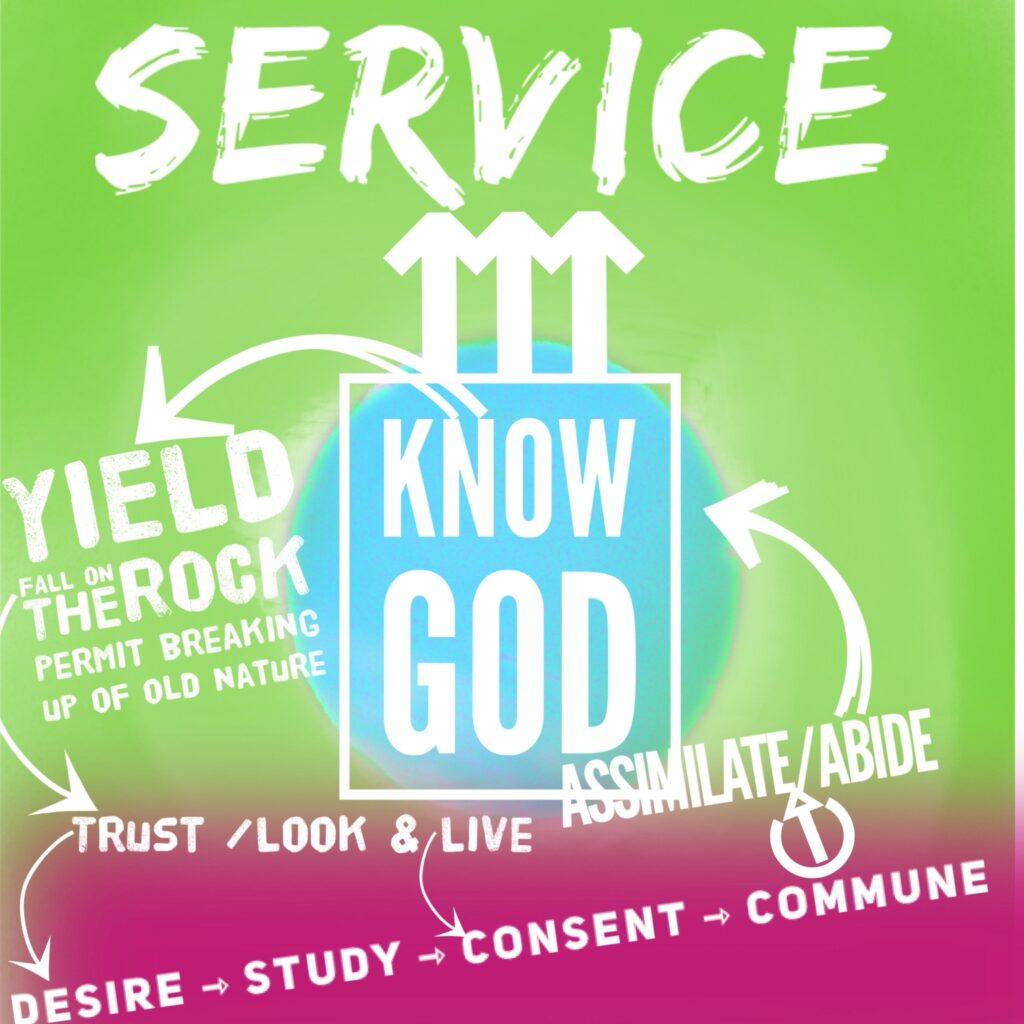
Which Day?
Matt 24; Mark 13; Luke 21:5-38
Aired Wednesday, March 11, 2026
Context
Wednesday
Departing the Temple
Sunset and it appeared as if hewn out of 1 piece of marble
Disciples and others behold the spectacle but Christ sees something very different
Privately on the Mount of Olives later, disciples request clarity on the topic of the End
Instruction given by Christ is vague with regards to which Day
Themes
The things that seem secure, sure, stable may fall apart in an instant
Christ alone is the foundation
Mercy reveals enough to inform but not so much to overwhelm
Watch & pray
False messiah vs The Messiah
You won’t know the day or hour, but you should be alert and sense the season
Narrative
Christ has left the temple on Wednesday. The sun is setting and the Temple is magnificent and there is a pause where Christ, the disciples and those surrounding them turn to see the spectacle. Christ states that one day, “…there shall not be even a stone upon a stone that shall not be thrown down.” Matt 24:2
Later the disciples and Christ are on the Mount of Olives. These moments are essential opportunities to instruct and prepare the Disciples for things to come. The Disciples open with the question, “…when shall these things be and what shall be the sign of Your Coming, and the completion of the age?” Matt 24:3
In mercy, Christ mixes the destruction of the object of their pride, stability, security and worship – the Temple, with His 2nd coming and that great Day (yom) of judgment. The Disciples hearts would have failed at the woes to come. Rather than revealing all things, He was intentionally vague, but clear enough to prepare them for the destruction of the Temple in AD 70. James, the brother of Jesus, would be martyred prior to AD 70, but the majority would be alive. Further clarification of details regarding His Second Coming were mixed in with the destruction of Jerusalem, for them and for us, lest we become complacent, deceived or lose faith and hope in His completing the work of “…creating all things new.” His first focus is, “…Be on your guard, so that no one deceives you.”
Expect persecution if you are exemplifying truth and encouraging the same in others. Why? Strife isn’t caused by the gospel, but the result of opposition to the gospel.
The Father alone knows the Day and Hour of the Second Coming, so don’t let “time-setting” get you excited only to suffer subsequent disappointment when the predictions of false prophets fail, but you should know the Season. Pray that your flight from the cities is not on the Sabbath and that you don’t have toddlers with all the attention and challenge they bring in the midst of crisis. Watch, work and pray that the time is used efficiently to make others aware of the shortness of our earthly lives which pass like vapor. Instead, grasp the eternal and forever stable, our Messiah, and His accomplishments and ongoing work on our behalf. Be ready!
What should we be doing now?
What have we set our sights on for stability, security and salvation?
Why did and why do/will conditions deteriorate in the time prior to the destruction of Jerusalem and in a parallel way, the world prior to Christ’s Second Coming?
How will we fortify our minds so that we aren’t deceived by the false messiahs?
We are told that not a single Christian lost their life in the destruction of Jerusalem, because they knew the signs of when to leave. Will we know the signs to leave the large cities prior to the Second Coming?
Refusing to See Jesus
John 12:34-50
Aired Tuesday, March 10, 2026
Context
Last event on Wednesday
Being familiar with truth in a superficial manner, blinds
Tradition/limited understanding held rigidly prevents growth
This is Christ’s last record of a public appearance prior to His trial
What will be the choice of those in the valley of decision?
What evidence is available to controvert the opposers of truth to align with the Truth, the Life and the Way?
Themes
Man’s limited understanding of truth should lead to confession not a denial of truth
An imbalanced interpretation of Scripture, if persisted in, may prevent one’s understanding when additional light comes
Christ’s sudden departure foretells of a more devastating departure in the presence of persistent unbelief
Narrative
Wednesday is nearly over and for those in the valley of decision, it is a critical time. Christ makes the last public plea prior to the Crucifixion. The stakes are high, eternal and solemn. Many have steadfastly refused the blatant evidence of His divinity. For them, the pleading of Christ falls on their deaf ears and His works are not seen because of blind eyes. The Hebrew Scriptures pointed out the eternal nature of Messiah, and the Scribes had fastened on these passages, but ignored the passages that spoke of a suffering Messiah who would give up His life. Some thought that there would be two Messiahs. One that would live forever and the other that would die. Now with this clear pronouncement of Christ speaking about His death, they furthered their obstinacy by stating their misunderstanding that the death of Christ would negate His Messiahship. His death and resurrection are essential to qualify Him to be a Savior that can. Unfortunately, they clung to the little they thought they knew and declared that Christ could not be the Messiah. Their darkened, unbelieving minds, remained in the dark when the Light was in their midst.
The apostle John points to their massive failure to understand Isaiah 53:1 and Isaiah 6:10 as a root cause for their unwillingness to trust Him with their lives and walk in the light. Sin requires the death of the sinner and the only remedy is a divine Life sacrifice. This doesn’t relieve the sinner of this consequence, unless the sinner dies with Christ and is resurrected with Him as a member of His body. It is easy to say, “I trust/believe God when times are easy, but it is a much more daunting exercise to calmly trust “…in the valley of the shadow of death.” So lest we be critical of those people in that day, we must honestly look at our willingness to trust Christ with everything, including our lives and our families lives – in every aspect of life.
Christ’s mission was to reveal the Father and personally invite us to come into clarity on the Father by observing Christ and His activities. He did not come to be a judge; however, His Life does require us to be a judge, and our conclusions will also be our judgment. Christ didn’t blind their eyes nor make them deaf, but like Pharaoh, exposure to truth will either harden us or soften us. The same sun that bakes the clay, softens the butter. The critical assessment is “What think ye of Christ”. To know Him will lead to confidence/trust in Him. Popular opinion or the opinion of others is a poor index of truth. We are saved as individuals and we must come to a decision on our own, surrendering to the prompting of the Holy Spirit.
Christ gave a clear object lesson by suddenly departing from them. Indecision may paralyze and have just as deadly an effect as an outright rejection of Him. The prophet Isaiah 55:6,7 stated our opportunity this way: “Seek the LORD while He may be found, call upon Him while He is near: Let the wicked forsake his way, and the unrighteous man his thoughts: and let him return unto the LORD, and He will have mercy upon him; and to our God, for He will abundantly pardon.
What Scriptures do we have unbalanced interpretations of?
What traditions have we held onto rather than coming into the Light?
What peer pressures are around us that prevent us from walking in the Light?
Have we persisted in slavery “…through fear of death”? Hebrews 2:15
Have I become adequately acquainted with the Father by a study of, reflection and cooperation with the Life of Christ?
What will my choice be? Today, Tomorrow and forever? Good times or bad times?
We Would See Jesus
John 12:20-33
Aired Monday, March 9, 2026
Context
Late Wednesday
It is clear that most Religious Leaders will persist in rejecting Christ
Deep grief is experienced by Christ and the Disciples
Non-Israelites present and request a personal interview with Christ through Philip
The fence of separation forbids non-Jews from entering the Temple’s closer areas of the courtyard
Philip consults Andrew and together they approach Christ
A lengthy interview follows with the Greeks and then the exclamation mark on the end is made by God communicating with His Son
Themes
Mission
Sacrifice
Separation Struggle
Mysterious farewell
Rejectors vs acceptors
Cost of discipleship
The Seed- unduplicatable Firstborn from the dead
Narrative
Much has happened Wednesday snd its now getting late in the day. Christ is in the courtyard of the Temple interacting, teaching healing those who will allow it and it’s quite clear that those who should be first in recognizing His Mission and Messiahship are outright and obstinately rejecting Him. Unimaginable grief weighs heavy on Him as He considers silently the consequences of this rejection. The separation from His Father that is soon to come and His being made as it were sin, is tearing at Him as well. This great Sacrifice, would any grasp its significance and grasp this great Gift and apply it? His thoughts are interrupted by Philip & Andrew. A group of Greeks have made a request to Philip for a personal interview with Christ. This is a welcome change from those who are persistently rejecting His grace. He sees the far-reaching impact of His Sacrifice and how this will breakdown the wall of separation and reconcile God and man and man with man. Earlier a single scribe had earnestly asked questions, now a whole group of earnest seekers have come to inquire, embrace and take full privilege of this Gift of His peace. These Greeks are better listeners and wiser than their non-Israelite colleagues and thirstily listen to the object lesson of The Seed, the best, being buried and lost sight of for a time, only to burst forth from the dirt with life and many more seeds. Even they won’t understand that day, but it will be clear on resurrection day and even more clear as the early church grows. These non-Israelites are given the high honor of eavesdropping on the 3rd affirmation of the Father to the Son, while those who should be able to hear it are deaf and blind. Christ is fortified, He will go forward with this daunting Mission.
Why can non-Israelites see and hear better than the Jews and what is motivating them to go to such lengths to see Jesus?
What does the object lesson of The Seed tell us about our end and beginning (baptism)
How willingly will we permit burial?
What mental picture should cement our willingness to go forward with His Missio
Woe
Matt 23:13-39; Mark 12:41-44; Luke 21:1-4
Aired Sunday, March 8, 2026
Context
Wednesday
Last day teaching in the Temple
Crescendo of Religious Leaders being stiff-necked and combative
The people spell-bound at those who they revered now revealing their devious and obstructive nature
Christ revealing dignity, authority, true piety and with each assault, He is being lifted up and drawing people to Him and revealing truth
Double standard of Religious Leaders – They burden the people but excuse themselves from their own rules
But people still have misplaced confidence in the Religious Leaders and it is a struggle to part with that which they have depended
Themes
Fake vs genuine
Choose you this day…
Revelation to Religious Leaders and the people
The end-point of righteousness vs unrighteousness
Heartfelt vs public display
True greatness
Loyalty
Narrative
Two showdowns -1) Religious leaders combatting Christ with the public watching with anxiety; 2) Christ revealing the true nature of the Religious Leaders and exposing their deception so that the public can choose with clarity who they will follow as a savior. With each attack, it becomes more clear who is true. But the people need a deep revelation as this giving up on the Religious Leaders is not easy. When men declare and deceive themselves and others with the idea that they represent divinity when in fact they are represent themselves, there are double standards, hypocrisy and airs of righteousness but this is just a cloak for evil. The Religious Leaders have placed heavy burdens on the people and buried the people in tradition and deprived them of their religious liberties. Christ’s mission for 3 1/2 years but especially in these closing scenes is to break this yoke of bondage. Gal 5:1; 2 Cor 3:17; James1:25; 2:12; 1 Peter 2:16; 2 Peter 2:19. Let no man compel your conscience or dictate your faith as this is the preogative of God alone.
Phylacteries/Tefillin, public offerings, pray, pontification all done literally and for show, but this is all meant for selfish glory accomplishing only a brief relief from dull, dry meaningless ritual.
True leadership = heartfelt service. True giving is costly.
Seven woes (woe = deep grief of permanent loss of something greatly desired or previously possessed with great preciousness)
1st woe – You make heaven inaccessible by perverting God’s Word both to yourselves and to others
2nd woe – steal from the vulnerable while pretending piety
3rd woe – proselytes for hell and double the evil
4th woe – oaths can be ignored if constructed carefully/deceitfully, injustice, indulgences
5th woe – over-complication of tithing system to confuse and over-obligate the people
6th woe – pretty outside, rotten inside
7th woe – pretenders of reverence but thugs, villains, murderers – decorate a tomb or learn what the prophet said
The separation struggle of God over those whom He has invested, loved, given exceptional gifts, mercy – all to no avail as they have permitted satanic agencies to have control over them
How can we place ourselves in the position of receiving blessings instead of woes?
Major in majors and avoiding majoring in minors
How should we approach our religious leaders and when they are failing and falling under the enemies influence, how can we do our part to arrest there declension from truth?
How do we steer clear of the enemies deception that leads to polishing and promoting the outside when the inside is rotten?
An Earnest Seeker
Matt 22:34-40; Mark 12:28-34; Luke 20:39,40
Aired Sabbath, March 7, 2026
Context
All traps have failed and rather than finding a way to defame Christ, they have unwittingly disenfranchised themselves from the peoples’s sentiment and it is clear that Christ is where affection, stability and instruction is meaningful
There is an increasing staccato of public encounters and the public are losing interest in the Religious Leaders and are fixing it on Christ, much to the distress of the the jealous ones
Desperation is setting in as the people are attaching themselves to Jesus rather then the religious leaders
Pharisees are imbalanced in their understanding of the 10 Commandments resulting in loss of mercy and concern about their brother/sister/neighbor
They need a fresh face to spring their latest trap
The point man for this trap will be uninformed of the Pharisee’s devious goal
Its already Wednesday and if they don’t secure His death before Passover, they worry they will have little chance to accomplish their murderous purpose.
The religious leaders’ sentiment is, it is better that One Man die so that the whole nation doesn’t perish – John 11:50
Themes
Truth
Majoring in majors, rather than minors
Sincerity in Seeking
How should one approach the Son of God?
Balance in spiritual matters with practical outcomes
What think ye of Christ?
Narrative
The attempt to try to fool God is absurd, but desperate and ignorant people do desperate things. The Pharisees placed an emphasis on the 1st 4 of the 10 Commandments and treated the last 6 as having far less importance and as a result, they were unloving, intolerant and unmerciful to the poor. They imposed a learned scribe/lawyer to ask a question: “Which is the greatest commandment of all?” Notice how limiting the question is and how Christ answers the question with a deep principle that unifies the whole of spirituality and all the commandments. Deep energetic focus, concern for and motivation to honor others, eclipses self and selfishness. This principle will direct our worship toward God and our relations to one another. This is not mere sentimentalism. This is commitment borne out of understanding the giving nature of our abundant God and His concern about us as His family. In the richness of this knowledge, we are equipped to be blessed and be a blessing to those around us. The scribe’s question was sincere and Christ’s answer deeply resonated with him. The scribe didn’t hesitate to publicly express his appreciation to Christ for this wise answer right there and then amidst the scowls and hatred of his colleagues. The scribe was convicted that Christ’s answer was true and was given an affirmation by Christ: “Thou art not far from the kingdom of God.” Set in its proper role, The Commandments show us our guilt, reveal our lack of love and convict us of our selfishness. We are then ready to petition the Savior in deep humility and plead for Him to rescue us from this desperate plight and to infuse us with this divine principle upon which the government of God is based.
Christ looks to those who hate and plot to destroy Him and finalizes the encounter with a riddle: “What think ye of Christ? whose son is He?” Christ is using Psalms 110:1 to invite deep reflection on what the RL refused to acknoledge, the Son of David=the Son of God. Psalm 110:1 reads, “The LORD [YHWY] said unto my Lord [adon], Sit Thou on My right hand, till I make Thine enemies Thy footstool. If David calls Him Lord, how is He his son? This riddle would sit heavily on those with any conscience left and would give them understanding, faith and love in the days and events that shortly followed.
What are the Commandments for?
How should we approach God’s Word? Dividing or unifying its themes?
What is this principle called love and have I allowed God to invest His love in me so that I may love others?
Who is the Son of David?
Do I fully accept and expect that the Son of God who is the Son of Man will transform me into His image
Trappers Trapped
Matt 22:15-33; Mark 12:13-27; Luke 20:20-38
Aired Friday, March 6, 2026
Context
Wednesday
Confederacy of enemies trying to find some expression of Christ to condemn him
Last day teaching in the temple
Bitter enemies now unite in their goal to destroy Jesus – Herodians, Sadducees join with Pharisees who already failed in their traps
Christ always speaking the truth in love, always redemptory in mission, never rude, but declaring sin and error
Themes
Revelation of the Father and plan of salvation
Humility vs pride and ruthless ambition/self-righteousness
Separation of Church & State
Death vs resurrection
Earthly systems vs the Kingdom of God
People worship vs God worship
Narrative
Since the Pharisees had been unable to trap Christ in any of their questionings of Him, the Herodians( despite being bitter enemies) join the Pharisees, hoping that together they can evoke some response from Jesus that will give them an opportunity to press Roman authorities into seeing Christ as a threat to their authority. The dilemma of a foreign nation controlling and governing Israel has been a hated reality for the Pharisees and the people. The Herodians and Sadducees have compromised with Rome and have found ways to profit from aligning with Rome and this has given them more power, but the Pharisees still hold favor with the people. This makes for a tense standoff between these groups. The Herodians are convinced they have the perfect trap. No matter how Christ answers, they will be able to use His words against Him. “…is it lawful to for us to give tribute to Ceasar, or no?” Christ responds with “Why tempt ye me?” Revealing He knows there vicious goals and deceptiveness. Being shown a coin, Christ uses this as a deep object lesson in separation between Church vs State. Christ responds with deep wisdom that informs our relation to the institutions of men and government today. “Render therefore unto Ceasar the things which are Ceasar’s; and unto God the things which are God’s.” This wasn’t an evasion of their question. The nation was by divine arrangement a protectorate of Rome. So long as Rome’s authority wasn’t in contradiction with God’s express will, the nation of Israel should live peaceably and supportive of the laws of the land. Had Israel been faithful to God and His plan, Rome would not have been permitted to rule over Israel. The principle put forward in Christ’s answer is of supreme value as we navigate questions of Religious Liberty and government over-reach today. The Herodians were silenced, but they secretly marveled at the wisdom of Christ’s response.
Now the Sadducees come forward to attempt their trap on Christ. The Sadducees were skeptics and materialists, but prided themselves that they adhered most closely to Scripture of all people groups. They denied the resurrection and the existence of angels. Death was a complete mystery to them. They made such an emphasis on free moral agency that self-destiny shaped their lives and in this imbalance they denied the power of the Spirit of God. There malformed ideas of God made them malevolent and uncaring to the vulnerable and poor. They chose their idea of a resurrection to trap Him. Their question is generated out of gross misunderstanding and bias. Christ goes right to heart of their deformity by defining the root of the problem. His answers is very different from His response to Pharisee’s. The Pharisee’s know the Scriptures but fail to align their heart and mind with their instruction. The Sadducees are in error because they don’t even bother to read Scripture. God is the God of the living. God identifies Himself as the God of Abraham, Isaac and Jacob. While they are resting in graves till Jesus comes, they will be resurrected on that great day! Because God’s Word is true, He can speak of things “…that are not as though they were.” Rom 4:17. Now the Sadducees are speechless and hang their heads and walk away.
What is Christ’s intention in conversing with these antagonistic groups?
How does the conversation go so as to always maintain a position of instruction, invitation and salvation?
How are these conversations relevant to us today and how do they inform our short-sightedness and ignorance?
How can we take the wisdom Christ longed to impart and apply it to our lives today?
Warnings Unheeded
Matt 21:23-46, 22:1-14; Mark 11:27-33,12:1-12; Luke 20:1-18
Aired Thursday, March 5, 2026
Context
Tuesday
Temple teaching
Plotting of leadership to destroy Christ and Lazarus
Laity and a few religious leaders studiously observing the interactions between Christ & the haughty, hostile religious leadership
Christ making every effort to warn those who are intent on obstructing and destroying Him & invites those who are in the valley of decision to follow Him
Nearly all Jewish elites attempt to create reasons to destroy Christ
The road to Calvary is nearing the end
Themes
How to wield authority
The Lamb – Full acceptance
Self-preservation or self-sacrifice
Loving obedience vs hostile hypocrisy
Traps and ambushes
Temporal vs eternal
The persistence of God to reach the rebel
Humility vs pomp and self-aggrandizement
Narrative
Christ teaching in the temple. A temple challenge by the Sanhedrin with the High Priest in front of those who seek Christ for healing, comfort, forgiveness, instruction. “By what authority…”. Christ answering a question with a question- “The baptism of John, whence was it? from heaven, or of men?” This scene is vividly etched into the minds of those in the valley of decision. The pompous, richly clothed elite, and the simple, humble, approachable Jesus. The baffled proud ones, unable to answer with downcast faces, walking away from this simple, Galilean who speaks with authority and turns the question back on those intending to trap Him. Christ proceeds in a loving way, to interrogate their intentions and motivations. Three stories are told by Christ with a subsequent reminder of the cornerstone from Solomon’s Temple. The religious leaders are unwittingly brought to self-disclose their devious plans to murder the Messiah. Two Sons, Wicked Tenants &The Wedding Garment. Christ didn’t tell these stories to mock deride or publicly shame those who sought to destroy Him, but He intended to warn and invite them to repent. Christ puts clarity on their options by reminding the religious leaders of the Cornerstone and His essential position in all aspects of spirituality and religion and warns them that if they refuse to humbly permit His leading, the religious leaders and their temple will be desolate and the Temple destroyed – not as a coercion or punishment but as a consequence
How does Christ treat His enemies?
How does He provide a revelation into their trajectory/plans
Why does Christ press on with the 3 stories?
How does this align with John 3:17?
He proceeds with utmost care not to give any opportunity for the religious leaders to have an excuse to reject Him & He speaks the truth in love.
He brings clarity to the people so there can be no mistaking who the Prophet Sent from God is.
Matt 21:12-17; Mark 11:15-19; Luke 19:45-48
Aired Wednesday, March 4, 2026
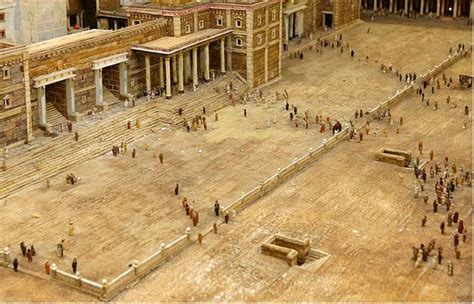
Context
Previous cleansing 3 yrs priorJohn 2:14-22
Love of the world, greed of gain/avarice, boasted of their knowledge/privilege(pride), hypocrisy, selfishness
Monday
Wanton loss of insight into the sacrificial system and its implication – slaughter for no good purpose
Bedlam of animals, bickering people, fraud/extortion
Outer court Temple
Themes
Authority
Worship
Rich/poor
Shema (listen)
Vocation
Children
Understand the message of Sanctuary
Narrative
Monday morning, the large porch filled with animals, angry bickering priests, sellers of “temple approved” animals, and pilgrims trying to exchange money and buy a sacrifice for Passover. Christ enters the area quietly. It has been 3 years since He drove away the greedy, malevolent priests, merchant-men and money changers. The cowardly swindlers have wondered why they ran from Him then and have vowed they won’t run away if it ever happens again. The lesson 3 years prior was clear-God would not have His house be a den of thieves, yet now, it is worse than before. Christ surveys the scene. The symbol of His sacrifice pre-figured in these animal sacrifices has been totally polluted and the “worshippers”, priests, pilgrims and participants have no appreciation of the Son of Man who blood will be shed in 3 days-the true Passover Lamb. Divinity flashes through His humanity. The Lamb pierces the bedlam with righteous indignation and restrained wrath. The selfish and avarice scatter. As they run, the down-trodden, the children, the sick and the grieved are making their way to the temple to see Jesus. They are welcomed by Christ and comforted, healed and instructed in truth. The mob which ran away now creeps back to see the spectacle. Children sing “Hosanna” The lame, dance. The sick are rejoicing. The knavely priests now point to the joyful people and accuse Christ of defiling the Sanctuary.
What did God intend when the sacrificial system was instituted and what constitutes True worship?
By what authority did Christ drive the abusers of the sacrificial system from the temple?
Why would Christ proceed with being the sacrificial Lamb in 3 days when there was no appreciation of His Life-offering?
As we worship, what are our hearts set on? How do we sing? Will we press forward as the panicking abusers of His grace run from His wrath?
The Triumphal Entry
Matt 21:1-11, 17-19; Mark 11:1-14,20,21; Luke 19:29-44; John 12:12-19
Aired Tuesday, March 3, 2026
Context
Bethany to Jerusalem
Sunday 1st day of the week 4 pm?
March/April Spring 31 AD
500 yrs prior Zech 9:9
Donkey & its colt
Christ & entourage increase as travelers for Passover join the happy throng
Themes
Joy/Sorrow
End/Beginning
Acceptance/rejection
Blessings/curses
Success/failure
Narrative
Life is effervescing, trees are in bloom, the hills are green, the air is clear, the travelers abuzz with talk of the Messiah and sense that something major is about to happen. Tradition has it that Israel’s kings announce their kingship by riding into the capital on a donkey, Jesus knows this act will further the motivation of the religious leaders to destroy Him, but 2 disciples are sent to retrieve a momma donkey and her colt for His procession to Jerusalem from Bethany. Christ sits on the colt and the expectant crowd begins the journey, growing both in number and enthusiasm. Songs and happy shouts echo from the hillsides. As they crest the last hill and look below at Jerusalem, it is expected this would heighten the elated group, but looking closely, it is noted that the face of Jesus saddens and tears slide down the beneficent cheeks of a face that has always championed joy. The grief deepens and now His whole body shudders in overwhelming sobs. The singing and shouts of hosanna cease. Puzzled, the crowd studies the face of Jesus to gain an understanding for this sudden change. Over a 1000 years of painstaking effort to gain trust, loyalty and love have been feigned by the religious leaders. Prophets slain, warnings ignored and invitations blatantly disregarded. Soon the throng will hear the hostility of the religious leaders admonishing the Roman guards to disperse the crowd. Those guards are mystified by the serenity and poise of Jesus and instead the religious leaders are admonished to stand down.
What prevents leaders from responding to overtures of grace and love?
Why does Jesus choose to present Himself in this manner?
Why does He allow Himself to be overcome with such massive grief & what underlies this grief?
What can we do to comfort & gladden His sorrow?
Simon’s Feast
Matt 26:6-13; Mark 14:3-11; Luke 7:36-50; John 11:55-57; 12:1-11
Aired Monday, March 2, 2026
Context
-Bethany
-4th Passover, Sabbath evening, March\April 31AD
-Christ, Martha, Mary, Lazarus, Simon, 12 disciples
-Dinner party in gratitude for Simon being healed of Leprosy
-Growing enthusiasm for a ‘Messiah’ by the people
-Plotting the Death of Christ & Lazarus by the religious leaders
Themes
True Love
Forgiveness
Gratitude
Life & death
Transformation
Who is The Christ?
Narrative
Gentle breeze, warm, arid, tension/buzz- something big is about to happen, travelers, Passover, reclined dinner party, murmur of conversations, Simon and Lazarus on either side of Jesus, engaging conversations & candlelight minimize notice of a young lady who unobtrusively approaches Jesus, the pungent odor of rich perfume interrupts all speech and all eyes turn to the spectacle of a weeping woman, doubled over the Guest of honor. She is anointing Jesus and wiping the excess perfume from His head & feet with her hair. The silence is broken by the murmuring of Judas, “why wasn’t this expensive perfume sold and put into the money bag for the poor?” The dumb-struck now take up Judas’s murmuring and the young lady shrinks back in shame as the group harshly shuns her with scowl & incredulity. Simon judges his Guest of honor as being an imbecile for allowing a known prostitute to touch Him with such affection publicly.
How does Christ handle this emotionally-charged minefield?
Mary
Judas
Simon
12
Can you trust this Jesus?
Can you surrender all to this Jesus?
Can you Love this Jesus?